Abstract
Accurate dating of historical texts is essential for understanding cultural and
historical narratives. However, traditional methods, such as paleographic and
physical examination, can be subjective, costly, and potentially damaging to
manuscripts. This paper introduces a machine learning approach to predicting the
authorship dates of historical texts by using named entities — specifically,
person and place names — as temporal markers. Using a dataset from Trismegistos,
which includes metadata on the earliest and latest possible writing dates, we
apply regression models to estimate text origins. While linear models like Lasso
and Ridge Regression showed limited success, nonlinear models, including Random
Forest, XGBoost, and Neural Networks, performed significantly better, with
ensemble methods delivering the best results. The top-performing ensemble model
achieved a mean absolute error of 45.7 years, surpassing traditional techniques.
This study demonstrates the potential of named entities as temporal indicators
and the effectiveness of ensemble learning in capturing complex historical
patterns. Offering a scalable, non-destructive alternative to traditional
methods.
1. Introduction
Accurate dating of historical texts and manuscripts remains a critical challenge
for scholars, archivists, and curators, as it fundamentally shapes the
understanding of historical narratives, cultural developments, and the evolution
of ideas, yet traditional methods often fall short in providing precise
chronological placement for many documents. This paper discusses the development
and implementation of a machine learning based regression model designed to
predict the year of origin for historical texts. Traditional historical
manuscript dating (HMD) techniques, including paleographic and physical
examination, present significant limitations due to their reliance on actual
manuscript samples and their associated costs, time investment and potential for
damage, motivating the exploration and development of modern computer-based
alternatives [
Omayio et al. 2022]. While direct physical techniques, such as
radiocarbon dating [
Jull et al. 1995], provide a means to compute the production date
of historical manuscripts, they are destructive due to the use of a sample from
the manuscript itself and can be affected by contaminants, leading to
inaccuracies. In addition, methods such as radiocarbon dating provide the
production date of writing support or material, which may not necessarily
provide the authorship date of the content within the manuscript. Indirect
physical techniques, such as spectroscopic methods, suffer from the same
drawbacks. However, they offer the advantage of being non-destructive, but can
still be influenced by modern pigments, leading to misleading conclusions
regarding the manuscript’s age. The existence of such pigments can cast doubt on
their authenticity and age, suggesting possible later modifications,
restorations, or contamination [
Castro et al. 2004] [
Omayio et al. 2022]. Similarly, while
paleographic analysis — which relies on the expertise of trained paleographers
to assess handwriting styles and manuscript features — has historically been
used for dating historical texts, this approach is often subjective, leading to
inconsistencies and disagreements in dating conclusions among experts, therefore
posing a challenge in the accuracy of historical manuscripts [
Omayio et al. 2022].
Analyzing writing style is another method of dating ancient texts [
Van Schaik 2013]. However, this method can also introduce inconsistencies and biases,
limiting the reliability of findings. A machine learning approach to
automatically analyze and date historic manuscripts can offer a more objective
and efficient solution to this problem.
In this project, machine learning techniques were used to predict the year that a
historical text was written, using named entities (person and place names) as
key features. This approach is based on the premise that the presence of
specific person and place names in a text can serve as temporal markers, helping
to estimate the period in which the text was written.
A machine learning approach is particularly useful in the context of dating
historical texts due to its ability to process large amounts of data
efficiently, identify complex patterns, and provide objective, consistent
results. Unlike traditional methods, machine learning can adapt to various
languages and time periods and continuously improve as more data becomes
available. This approach also offers a non-destructive alternative to physical
dating methods, preserving valuable historical artifacts. By leveraging these
advantages, machine learning techniques can significantly enhance the ability to
date historical texts accurately and efficiently, contributing to a deeper
understanding of historical narratives and cultural developments.
The dataset for this study consists of a one-hot encoded matrix of person and
place names extracted from historical texts, alongside metadata specifying the
earliest (y1) and latest (y2)
possible writing dates. Since many records contain exact years (y1 = y2), a regression model to
predict a specific year of authorship was best fit. However, for texts with
uncertain dates (y1 ̸= y2),
additional strategies were considered to refine the predictions. The objectives
included exploring patterns in the data, handling date uncertainty, building a
predictive model, and improving its accuracy through feature selection and
ensemble techniques. To evaluate model performance, the mean absolute error was
used. This study makes significant contributions to the fields of historical
text dating and computational humanities. By leveraging named entity-based
features, the research demonstrates their effectiveness as strong temporal
indicators for predicting authorship dates. Furthermore, it highlights the power
of ensemble learning in improving prediction accuracy. Additionally, the
research provides valuable insights into the challenges associated with dating
texts from specific time periods.
2. Related Work
Recent advancements in computational techniques have significantly enhanced the
dating of historical texts and manuscripts. [
Moscato et al. 2022] utilized a memetic
algorithm-based Continued Fraction Regression (CFR) to date 181 Shakespeare-era
plays (from 1585-1610), achieving a Mean Squared Error (MSE) of 21.25 by
analyzing word frequency patterns, demonstrating the potential of
regression-based methods for temporal prediction. Similarly, [
Pavlopoulos et al. 2024]
applied text regression to Greek papyri, achieving a mean absolute error of 54
years using extremely randomized trees, emphasizing textual features over
subjective paleographical methods. [
Hellwig 2019] employed supervised learning
with linguistic features to date Classical Sanskrit texts, successfully
classifying over 80% of the Bh¯ıs.maparvan’s adhy¯ayas, while [
Yu and Huangfu 2019]
leveraged bidirectional LSTM networks for ancient Chinese texts, achieving 95%
accuracy without manual feature extraction.
Handwritten document recognition has also progressed, with [
Ullah and Jamjoom 2022]
achieving 96.78% accuracy in recognizing Arabic script using Convolutional
Neural Networks (CNNs), addressing challenges posed by cursive forms and style
variations. [
Wahlberg et al. 2016] applied deep convolutional neural networks to
premodern manuscripts, achieving a median absolute error of ±11.1 years,
outperforming handcrafted feature methods (MSE 810-1389) with transfer learning
and Sparse Gaussian Process regression. [
He et al. 2014] introduced the Medieval
Paleographic Scale (MPS) project, combining global and local regression for a
mean absolute error of 35.4 years, while their 2016 study proposed a clustering
algorithm (MLSOM) with a novel H2OS descriptor, yielding a mean absolute error
of 15.9 years. [
Hamid et al. 2018] fused textural features (Gabor, U-LBP, LBP) for a
mean absolute error of 20.13 on the Medieval Paleographic Scale dataset, and
[
Koopmans et al. 2024] explored data augmentation with support vector machines,
improving accuracy by 4.5% despite selective feature effectiveness.
[
Kumar et al. 2011] applied a supervised language modeling approach to date fictional
texts by capturing implicit temporal cues through Kullback-Leibler Divergence,
achieving a median error of 23 years on Gutenberg short stories (1798–2008),
thus refining document dating in narrative corpora. Similarly, [
Ren et al. 2023]
introduced the Time-Aware Language Model (TALM), which incorporates temporal
adaptation to align word representations across historical periods. Evaluated on
Chinese and English corpora, TimeAware Language Model achieved an F1 score of
84.99% on the Twenty-Four Histories Corpus, surpassing state-of-the-art models
in diachronic text analysis. Grapheme-based handwriting analysis using
Self-Organizing Time Maps (SOTM) was employed by [
Dhali et al. 2020] to cluster
historical scripts, such as the Dead Sea Scrolls, into temporal categories,
achieving a mean absolute error of 23.4 years. While outperforming traditional
texture-based methods, the approach is constrained by its reliance on
categorical classification and handwriting features, limiting its scalability
across languages and document types.
[
Assael et al. 2025] use a tool, Aeneas, a generative neural network for
contextualizing ancient texts. Aeneas has a much broader scope than our project
as its goals are to contextualize ancient texts and artifacts, going as far as
performing restoration. As of the date published in the article, Aeneas
currently focuses on Latin data.
3. Dataset
3.1. Origin of the dataset
The website Trismegistos, accessible at
https://www.trismegistos.org, functions as a digital resource for
investigating ancient civilizations across a broad geographic expanse,
encompassing regions from Scandinavia to Ethiopia and from the Canary
Islands to the Indus Valley, during the era from 800 BCE to 800 CE[
Depauw 2018]. Originating from several research endeavors at KU Leuven, the
platform initially concentrated on Egyptian papyri and other textual
artifacts, with a particular focus on the individuals and locations they
reference. The database has developed gradually, beginning with manual data
input and periodic updates through partnerships with affiliated projects.
More recently, it has integrated specially designed, rule-based Named Entity
Recognition (NER) models to partially automate the extraction of references
to people and places from comprehensive text repositories, such as those
found on papyri.info [
Broux and Depauw 2015] [
Depauw and Van Beek 2009]. Each record in the dataset
is meticulously structured and annotated, featuring extensive metadata that
includes details on the text’s origin, chronological placement, language,
genre, physical properties, and thematic content. This detailed metadata
empowers scholars to examine and interpret the texts within their respective
historical, linguistic, cultural, and geographic frameworks. Academics and
specialists from a variety of disciplines — ranging from archaeology and
history to philology, linguistics, and digital humanities — utilize the
Trismegistos dataset for diverse research goals. The platform serves as a
crucial instrument for exploring ancient societies, their economic
frameworks, religious practices, languages, and cross-cultural dynamics,
thereby offering a deeper comprehension of the multifaceted nature of life
in the ancient world.
3.2. Structure of the dataset
The dataset obtained from Trismegistos comprises a comprehensive collection
of features that describe historical texts. It was processed to a one-hot
encoded manner, i.e., categorical data present in the dataset was
represented by binary values, with “1” indicating the presence of a feature
and “0” indicating its absence. The dataset includes a total of 11,599
unique person names and 4,784 place names, each formatted with a specific
identifier. Each text entry is uniquely identified by a text ID, which
serves as a reference point for the associated features.
In addition to the features, the dataset contains corresponding labels that
provide information regarding the approximate date range of each text’s
creation. Key variables within the labels represent this date range: one
variable serves as the approximate start date (y1),
while another serves as the approximate end date (y2). When y1 equals y2,
it indicates the exact year of creation of the ancient text. The one-hot
encoded dataset consists of 30,324 rows (texts) and 16,383 columns
(features).
The labels (year of writing) included 29,250 rows, containing the dependent
variables (y1 and y2) that the
models aim to predict. These labels provide the reference values against
which the model’s predictions are evaluated during both training and testing
phases. This dataset is structured to facilitate effective training and
evaluation of machine learning models for historical text dating.
Proper alignment between the datasets was a critical preprocessing step. Each
text sample was associated with a unique identifier (text ID), which was
used to match corresponding entries across both datasets. As some entries in
the feature set did not have matching labels, and vice versa, an inner join
was performed using this identifier to retain only the samples present in
both datasets. Following this alignment, the resulting dataset comprised
8,565 entries, each containing both feature representations and their
corresponding labels.
4. Methodology
4.1. Preprocessing and Data Exploration
For most models, additional scaling was unnecessary. However, for the neural
network, StandardScaler was applied to transform each feature to have zero
mean and unit variance. This step was important for mitigating issues such
as vanishing or exploding gradients and ensuring compatibility with normal
weight initialization. The target variable y was normalized to the range
using MinMaxScaler, aligning with the linear output activation function and
mean absolute error loss function employed during training.
Since the features were highly sparse, low-variance features were filtered
using a threshold of 0.001. This process significantly reduced the feature
space from 16,383 to 1,345 columns.
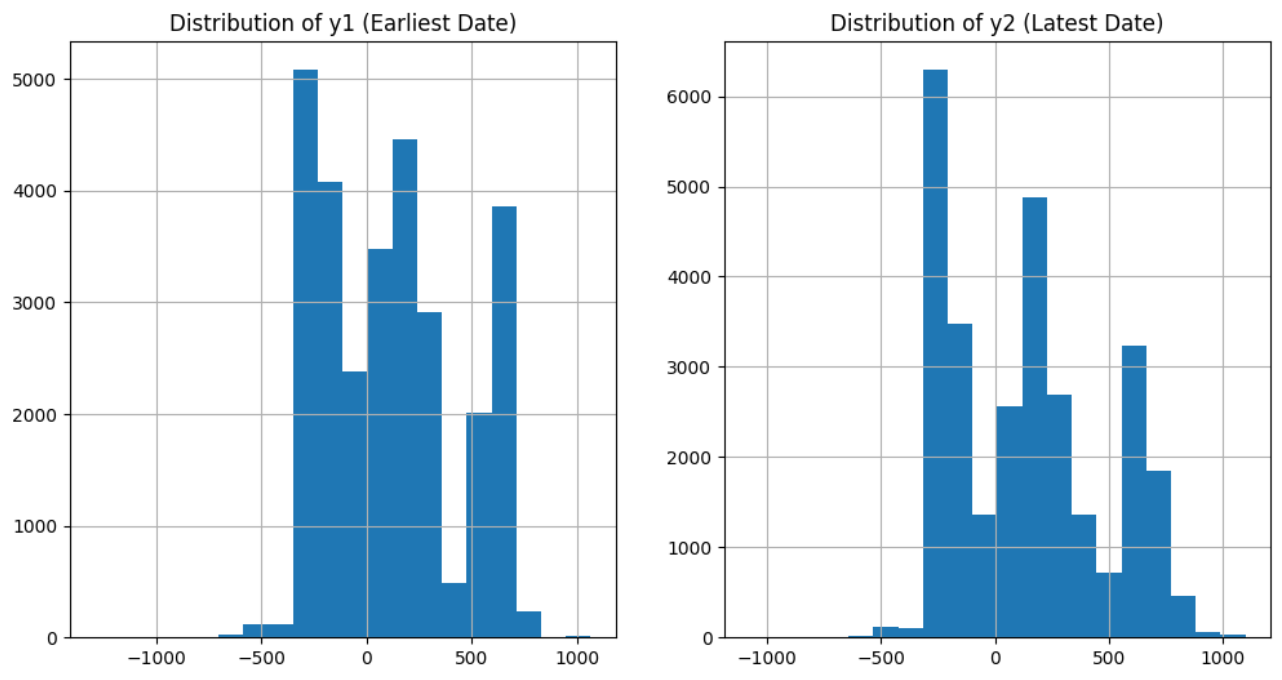
The mean values for the earliest y1 and latest y2 recorded dates were approximately -119 and 146,
respectively (see Figure 1 for the distribution of earliest and latest
dates).
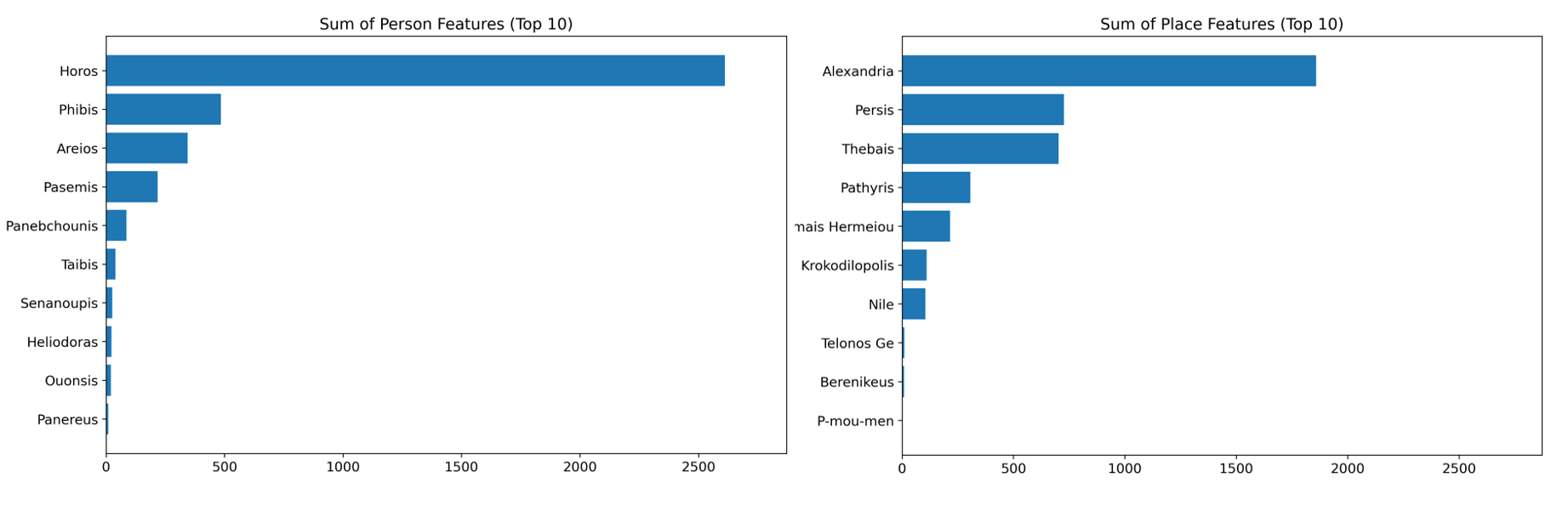
The top 10 most frequently occurring features related to persons and places
across the dataset were visualized by generating bar graphs (refer to Figure
2). These visualizations provided insight into key feature distributions and
their potential influence on model predictions.
To determine the most appropriate modeling approach, the distribution of
exact (y1 = y2) and non-exact
(y1 ̸= y2) year matches in
both raw and filtered datasets were assessed. In the raw dataset, it was
found 16,698 rows where y1 = y2 and 12,550 rows where y1 ̸= y2. After filtering, the dataset contained 5,239 rows
where y1 = y2 and 3,326 rows
where y1 ̸= y2. This higher
proportion of exact years in both the raw and filtered datasets suggested
that regression would be more suitable for the task. It was believed that
regression was the better approach because predicting an exact year (a
continuous variable) aligns with the strengths of regression, and the
majority of the ground truths were a single continuous year rather than a
range of years.
Since regression was chosen, a target column that handles both cases: when
y1 equals y2 (a single
year) and when y1 does not equal y2 (a range of years) was created. The target variable, y target,
was set to y1 in cases where the two values were
equal. When they differed, the y target was assigned the midpoint of y1 and y2, as the midpoint
provides a reasonable estimate for a range when an exact year is
unavailable. This new target column replaced y1 and
y2 as the ground truth label. All other ground
truth labels were dropped, as they were deemed unnecessary for predicting
the year a text was written. However, it could be worthwhile to explore
using these additional labels as features in the dataset to assess whether
they improve model performance.
4.2. Feature Engineering
4.2.1. Feature Importance Evaluation
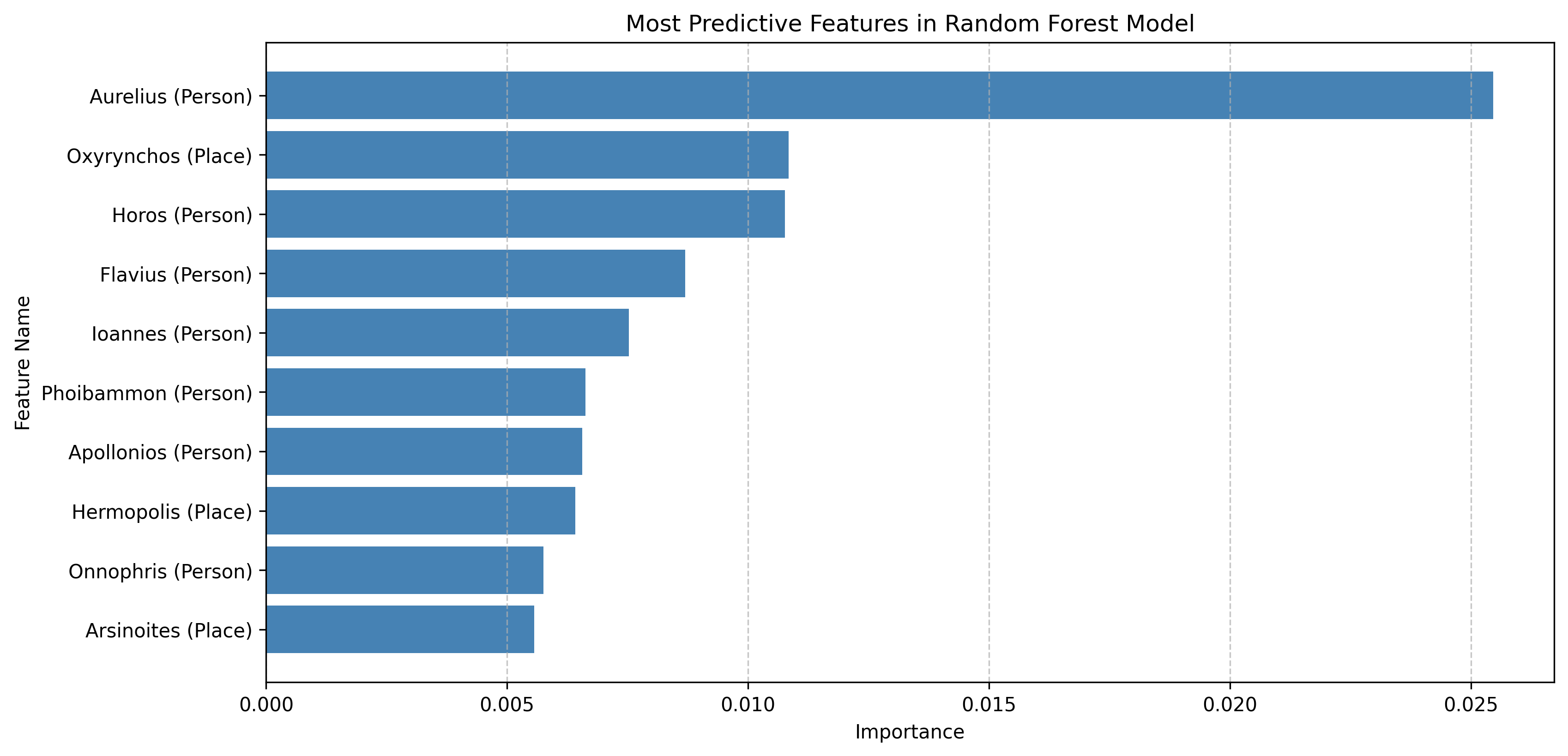
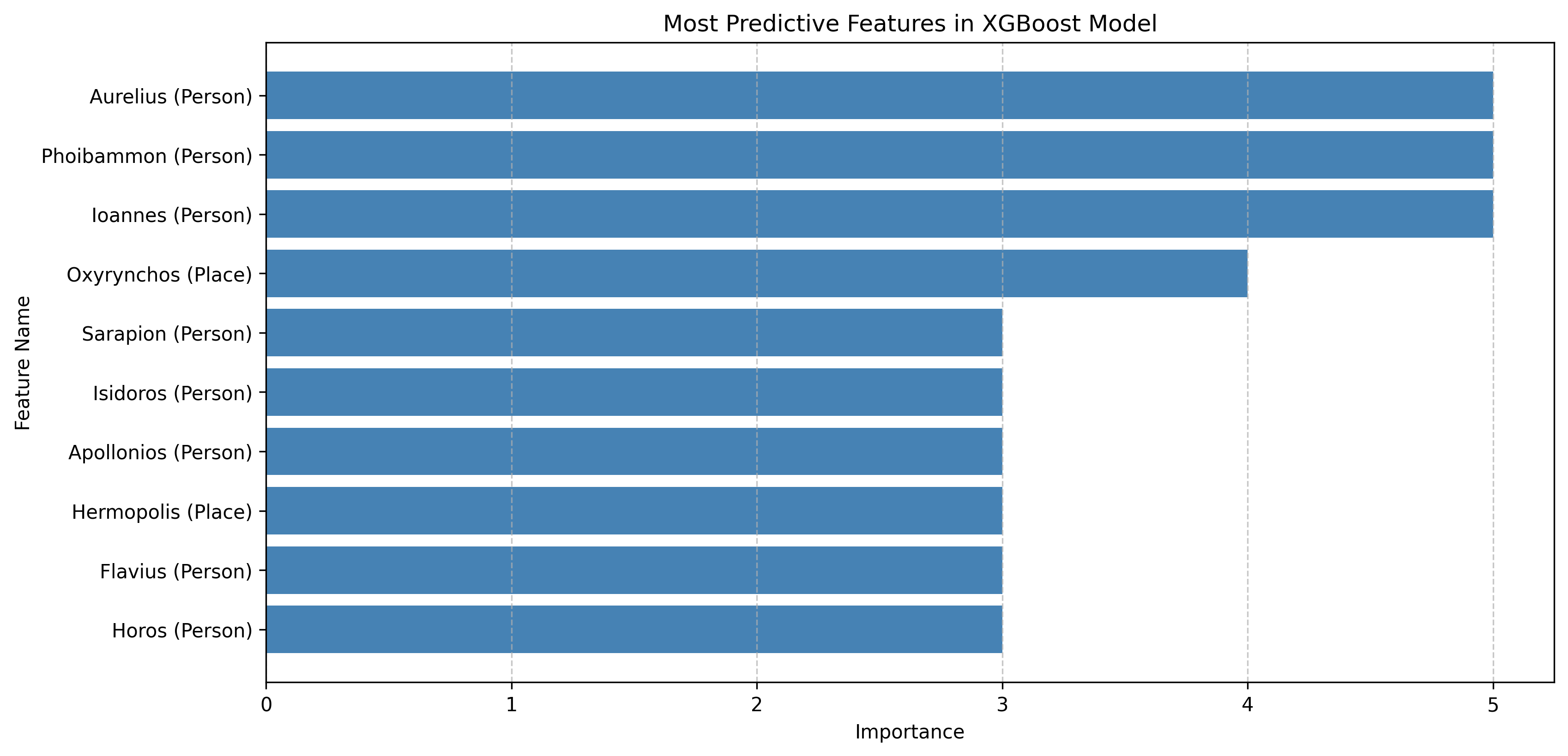
In order to understand the most predictive features, the most predictive
Singular Value Decomposition (SVD) transformed features were calculated.
Then each singular value decomposition transformed feature was mapped to
its original weighted components. Next, the weights were aggregated
across all singular value decomposition components to estimate the
contribution of each original feature (name/place). The top-ranked
features were then selected based on highest weights. The plots below
illustrate the top 10 most important features for both the Random Forest
and XGBoost models (Figures 3 and 4).
4.2.2. Dimensionality Reduction and Feature Transformation
To address the challenges posed by high-dimensional datasets, singular
value decomposition was employed as the method for dimensionality
reduction. Singular value decom position is particularly effective in
reducing the number of features in sparse matrices, which characterize
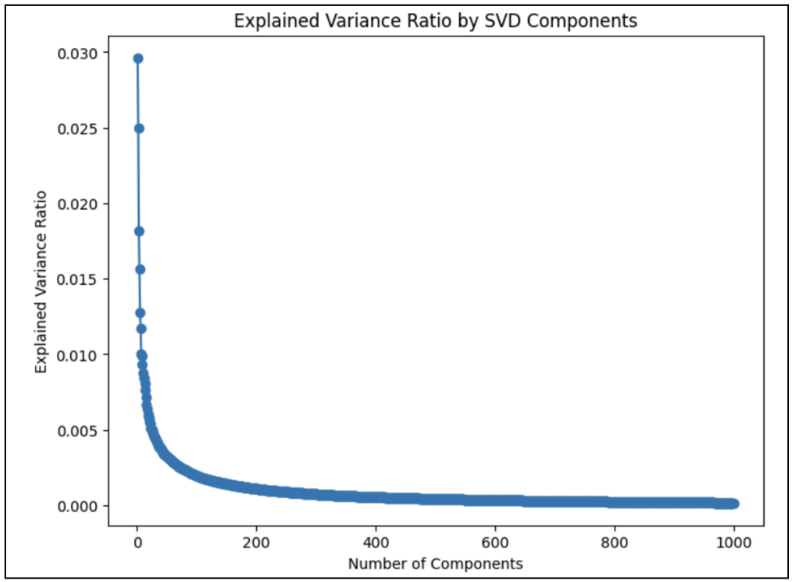
the dataset. Through empirical testing, 1,000 principal components were
selected, allowing for the retention of 95% of the variance in the data
despite a reduction in feature count by over 15,000. This choice
demonstrated strong performance, as evidenced by the explained variance
ratio.
To better understand the impact of dimensionality reduction through
singular value decomposition, an analysis was conducted on the plot
depicting the explained variance ratio across the components. This plot
illustrates the extent to which the variation in the original data is
captured by a specific number of singular value decomposition components
(refer to Figure 5).
When exploring the number of components significantly exceeding 1,000, it
was observed that variance retention often surpassed 0.9999, leading to
suboptimal model performance due to overfitting.
To further refine the dataset, low-variance feature removal was
implemented, discarding features with minimal variation across the
dataset. The VarianceThreshold was applied to eliminate features with a
variance below 0.001, resulting in a reduction of the original 16,383
features to 1,345. This process enhanced computational efficiency while
preserving the model’s ability to capture meaningful patterns.
Through the combination of dimensionality reduction with singular value
decomposition and low-variance feature removal, a more compact and
informative dataset was successfully created. This transformation
streamlined the original one-hot encoded features while maintaining key
patterns, thereby improving the efficiency and effectiveness of machine
learning models.
4.3. Model Development
4.3.1. Data Preparation and Scaling
To prepare the dataset for model training and evaluation, it was split
into training and testing subsets. The features (denoted as (X))
included all input variables, while the labels (denoted as (y))
corresponded to the target years or year ranges for prediction. 80% of
the data was allocated for training, while the remaining 20% was
designated for testing, and a random seed of 42 was employed to ensure
reproducibility during the splitting process.
The purpose of this split was to evaluate the model’s generalization
capabilities on unseen data. The training set was utilized to fit the
model, while the test set provided an unbiased estimate of its
performance.
For most models, scaling was not required due to the dataset being
one-hot encoded and subsequently reduced through Variance Thresholding
and singular value decomposition. Variance Thresholding eliminated
low-variance features without altering their scale, and singular value
decomposition produced principal components that were already normalized
during the decomposition process. As a result, the features were
well-suited for most algorithms without additional preprocessing.
The neural network required additional scaling to ensure efficient and
stable training. Given that neural networks are sensitive to feature
magnitudes due to their reliance on gradient descent optimization,
Feature Scaling and Target Scaling methods were applied.
StandardScaler was applied to (X), transforming each feature to have zero
mean and unit variance. This approach mitigated issues such as vanishing
or exploding gradients and ensured compatibility with the network’s He
Normal weight initialization. In addition, MinMaxScaler was applied to
(y), normalizing values to the range [0, 1]. This normalization aligned
the target variable with the linear output activation function and the
mean absolute error loss function employed during training.
Standardizing the input features improved gradient-based optimization,
resulting in faster convergence and more stable weight updates.
Moreover, normalizing the target variable ensured that predictions were
appropriately scaled to match the training objectives.
After
scaling, the final datasets were (X train scaled) and (y train scaled),
which was utilized for model training, and (X test scaled) and (y test
scaled), which was used for evaluating model performance on unseen data.
Scaling transformations were implemented as a pipeline to ensure
consistent preprocessing for both training and testing datasets,
enhancing reproducibility and reliability.
Additionally, the EarlyStopping callback was utilized during training to
terminate the process early if the validation loss ceased to improve.
The ReduceLROnPlateau callback was also employed to decrease the
learning rate when the model’s performance plateaued. These techniques
prevented overfitting, maintaining a validation mean absolute error
close to the training mean absolute error (e.g., 49.785 vs. 48).
4.3.2. Model Implementation Ridge
4.3.2.1. Regression
A Ridge regression model was employed with cross-validation using 5
folds. Ridge regression incorporates an L2 regularization term into
the linear regression model, penalizing large coefficient values to
help prevent overfitting. The strength of the regularization is
controlled by the alpha parameter when instantiating the RidgeCV
class. The 5-fold cross-validation process involved partitioning the
training data into 5 parts, training the model on 4 parts, and
validating on the remaining part, repeating this process across all
folds.
The mean absolute error, which measures the average absolute
difference between predicted values and ground truths, was computed.
The best Ridge model yielded a training mean absolute error of
109.62 and a testing mean absolute error of 124.12, representing
some of the lowest scores among all models evaluated. The relatively
poor performance of Ridge and Lasso regression compared to other
models suggested that the data exhibited nonlinear
characteristics.
4.3.2.2. Lasso Regression
A Lasso linear regression model was also utilized with 5-fold
cross-validation. Lasso regression incorporates an L1 regularization
term, allowing some coefficients to be shrunk to zero, effectively
reducing the feature set. Despite tuning the alpha hyperparameter,
Lasso emerged as one of the poorer performing models, achieving a
training mean absolute error of 113.21 and a testing mean absolute
error of 125.16 with the optimal alpha value set at 0.109.
4.3.2.3. Random Forest
A Random Forest model was employed for regression tasks, constructing
an ensemble of 100 decision trees. This ensemble learning algorithm
combines multiple weak decision trees to enhance prediction accuracy
and reduce overfitting. Bootstrap sampling was utilized to randomly
select samples with replacement from the training data, creating
several datasets for training individual trees. Each decision tree
predicted a value, and the final prediction was derived from the
average of all tree predictions in the forest.
The initial Random Forest model produced significantly better results
than the linear models, achieving a training mean absolute error of
30.7 and a testing mean absolute error of 78.6 after 8 minutes and
15 seconds of execution. The Random Forest Regressor emerged as one
of the highest-performing models in this study, significantly
outperforming linear models such as Lasso and Ridge regression. To
further enhance its performance, hyperparameter optimization was
conducted using GridSearch with cross-validation, systematically
exploring a range of hyperparameter combinations to identify optimal
settings for the model.
The parameters tuned included:
- max depth: The maximum depth of each decision tree.
- min samples split: The minimum number of samples required to
split a node.
- n estimators: The number of decision trees in the forest.
5-fold cross-validation was employed to ensure the robustness
and generalizability of the model during the tuning
process.
4.3.2.4. Optimal Hyperparameters
Following the GridSearch process, the following hyperparameters were
identified as optimal:
- max depth: 20
- min samples split: 5
- n estimators: 300
4.3.2.5. Model Performance
With the optimized hyperparameters, the Random Forest Regressor was
retrained and evaluated on both the training and testing datasets,
yielding:
- Training Mean Absolute Error: 31.35
- Testing Mean Absolute Error: 77.80
The improvements achieved through hyperparameter tuning underscored
the model’s ability to capture complex, nonlinear patterns in the
dataset. Although the Random Forest Regressor delivered strong
results, additional experimentation with other advanced models was
conducted to explore further enhancements in predictive
performance.
4.3.2.6. Gradient Boosting
The gradient boosting model, specifically XGBoost, was employed as an
efficient and accurate framework for machine learning. Various
parameters were manually adjusted to improve model performance,
reducing the mean absolute error from 81 to 71.
Boosting is an ensemble learning technique that sequentially combines
weak learners (such as shallow decision trees) to form a strong
learner. Each new tree is trained to correct the errors made by the
previous trees. The XGBoost framework incorporates regularization to
prevent overfitting, is optimized for speed and low memory usage,
and supports sparse data.
The XGBoost model was notably efficient, taking only 20 seconds to
run, and achieved a mean absolute error of 71.2 with an R-squared
score of 0.84. This R-squared value indicates that 84% of the
variation in the target variable was captured by the model,
demonstrating the predictive power of the selected features.
4.3.2.7. Neural Network
A deep neural network (DNN) was designed using TensorFlow for
regression tasks. The architecture consisted of an input layer that
accepted input data with a specified dimension, followed by four
hidden layers with progressively decreasing neuron counts to refine
feature extraction. The first hidden layer contained 512 neurons
with ReLU activation, He initialization, L2 regularization (1e-4),
batch normalization, and a dropout rate of 0.36. The second layer
had 256 neurons with similar settings but a slightly lower dropout
rate of 0.3. The third layer had 128 neurons and followed the same
configuration as the second, while the fourth layer contained 64
neurons with reduced L2 regularization (1e-5). The final output
layer consisted of a single neuron with a linear activation
function, making it suitable for regression tasks.
To optimize performance and prevent overfitting, batch normalization
was incorporated after each hidden layer, facilitating faster
convergence and reducing sensitivity to initialization. The Adam
optimizer with gradient clipping was utilized to enhance stability
during training. The model was trained with a learning rate of 1e-2,
a batch size of 512, and for a total of 500 epochs. Early stopping
was applied, monitoring validation loss with a patience of 50
epochs, while learning rate reduction halved the rate after 8 epochs
without improvement, with a minimum learning rate of 5e-7. Key
hyperparameters, including learning rate, batch size, and early
stopping patience, were fine-tuned based on validation
performance.
To further optimize the model, several techniques were
implemented:
- Dropout Regularization: Prevents over-reliance on specific
neurons by randomly dropping units during training.
- Learning Rate Scheduling: The ReduceLROnPlateau callback was
implemented to halve the learning rate after 8 epochs without
improvement.
- Early Stopping: Training was halted when validation loss
plateaued, ensuring computational efficiency.
- 10-Fold Cross-Validation: The model was evaluated across 10
folds to minimize bias and variance.
4.3.2.8. Ensemble Models
Finally, individual model outputs were combined using weighted
ensemble techniques, which included:
- Weighted Neural Network Ensemble: The neural network ensemble
was constructed by leveraging the models generated during
10-fold cross-validation. Each of the 10 neural network models
which were trained on a unique combination of training and
validation splits, was preserved. These models were then
combined into a single ensemble by computing a weighted average
of their predictions. The weights were determined based on each
model’s validation performance, assigning greater influence to
models with lower mean absolute error. By aggregating models
trained on distinct training-validation splits, the ensemble
incorporated diverse learned patterns, which reduced model bias
and variance, leading to stronger generalization. As a result,
the neural network ensemble achieved a lower mean absolute error
than any individual model, highlighting the benefit of
aggregating multiple individually trained models into a stronger
predictive model.
- Super Ensemble: Integrated outputs from the neural network,
Random Forest, XGBoost, and LightGBM models. Although this
approach did not achieve the lowest mean absolute error, it
demonstrated the potential for blending diverse algorithms to
capture varied aspects of the data.
The super ensemble served as an experimental approach to validate the
robustness of the combined methodologies, balancing trade-offs
between mean absolute error and R-squared scores.
4.3.3. Hyperparameter Tuning
Hyperparameter tuning was performed for different models based on their
respective characteristics using methods such as LassoCV, RidgeCV and
GridSearchCV for the RandomForest model. LassoCV and RidgeCV are
specialized implementations of the Lasso and Ridge regression in
scikit-learn that automatically optimize the alpha parameter through
cross validation. Similarly, GridSearchCV enables an exhaustive cross
validation search over a predefined set of hyperparameter values to
identify the optimal configuration.
For the Lasso and Ridge regression models, the alpha hyperparameter was
tuned, as it determines the strength of regularization applied to the
model’s coefficients. Optimizing alpha is crucial to balancing bias and
variance, thereby preventing both underfitting and overfitting.
Hard-coded alpha values were specified for the RidgeCV model to evaluate
its performance across different levels of penalization.
For the Random Forest model, hyperparameters were optimized, including n
estimators (number of trees), max depth (maximum depth of each tree), and min
samples split (minimum number of trees required to split a node). Using
GridSearchCV, predefined values for these hyperparameters were explored
to determine the optimal combination. Once the best hyperparameters were
identified, the RandomForestRegressor was trained with the optimized
settings, leading to expected performance improvements.
Further exploration of other models was conducted to assess potential
improvements in predictive performance. The Gradient Boosting model
underwent manual hyperparameter tuning, where parameters were adjusted
iteratively based on the mean absolute error of each model iteration.
The tuned parameters included colsample_bytree, learning_rate,
max_depth, alpha, and n_estimators, to determine the configuration that
minimized the mean absolute error. If a change in a hyperparameter value
resulted in a lower mean absolute error, further adjustments were made
in the same direction until the improvement plateaued. Once a parameter
reached an optimal value, the next hyperparameter was tuned following
the same approach. This iterative process was repeated until no further
reductions in mean absolute error were observed, ensuring that the model
achieved the best possible performance with the tuning constraints.
Initial results from the Support Vector Machine (SVM) model indicated
poor performance, with a mean absolute error of 226.18. However,
visualizing predictions against actual values revealed that the
predictions were clustered around 100, suggesting the need for
hyperparameter adjustment. Increasing the C hyperparameter to 956.1
improved the support vector machine’s mean absolute error to 94.5.
For the neural network model, key hyperparameters, including learning
rate, batch size, and number of epochs, were fine-tuned to enhance
predictive accuracy. A dynamic learning rate was implemented using the
ReduceLROnPlateau callback, which halved the learning rate, whenever
validation loss plateaued for 8 epochs. A batch size of 512 was selected
to balance training speed and accuracy, as smaller batch sizes improved
accuracy but extended training time, whereas larger batch sizes reduced
accuracy while accelerating training. Additionally, early stopping was
employed to prevent overfitting and unnecessary training.
Following these optimizations, the neural network model achieved an
average mean absolute error of 49.785 with a standard deviation of 3.87,
demonstrating significant improvement over the initial configurations.
This tuning process emphasized the importance of hyperparameter
optimization in refining model performance and highlighted the value of
cross-validation in ensuring robust and reliable results.
4.4 Evaluation
To prepare the dataset for model training and evaluation, it was split into
training and testing subsets. 80% of the data was allocated for training and
20% for testing, using a random seed of 42 to maintain reproducibility. The
feature matrix x comprised all input variables, while the target variable y
represented the predicted year or year ranges.
4.4.1. Cross-Validation
Cross-validation was employed to enhance the robustness of model
performance and mitigate the risk of overfitting. For Lasso linear
regression and Ridge regression, a 5-fold cross validation approach was
utilized. In the case of the Random Forest regressor, GridSearch
cross-validation was implemented, as discussed in Section 4.3.2, “Model
Implementation.”
For the neural network model, to ensure robust performance and prevent
overfitting, 10-fold cross-validation was implemented. This method
allows for the assessment of model robustness.
10-fold cross-validation was performed for the NN model with k set to 10,
resulting in the dataset being divided into 10 equal subsets. For each
fold, the model was trained on 9 of the subsets and validated on the
remaining one, ensuring that each subset was utilized for validation
exactly once.
The main steps in the cross-validation process are outlined as
follows:
| Model |
Mean Absolute Error |
| Lasso |
124.89 |
| Ridge |
123.8 |
| Random Forest |
77.8 |
| XGBoost |
71.4 |
| Support Vector Machine (SVM) |
94.53 |
| Neural Network (NN) |
48 |
| RF + XG + LGBM + NN Ensemble |
47 |
| Weighted Neural Network Ensemble |
45.7 |
| Super Ensemble (Everything) |
46.9 |
Table 1.
Mean Absolute Error values for various models
- Data Splitting: The dataset was divided into 10 equal subsets.
Within each fold, feature scaling was performed using
StandardScaler, while target values were scaled using
MinMaxScaler.
- Model Training and Evaluation: For each fold, a new model was
instantiated using a neural network function create model (see
section 4.3.2), which defined a neural network architecture
comprising four dense layers, dropout layers, batch normalization,
and L2 regularization. The model was compiled with the Adam
optimizer, utilizing a learning rate of 1e-4, and trained on the
training subset. The validation subset was employed to evaluate the
model’s performance.
- Metrics: Model performance was assessed using the mean absolute
error metric, which served as a key evaluation criterion for the
regression task. The mean absolute error was computed for the
validation fold, and the average mean absolute error across all
folds was recorded.
Upon completion of the cross-validation process, the model exhibiting the
lowest average validation mean absolute error was selected for further
evaluation and testing, thereby ensuring that the model’s
hyperparameters were optimized for generalization.
4.4.2. Metrics
4.4.2.1. Mean Absolute Error
Mean Absolute Error is utilized to quantify the average magnitude of
errors in a set of predictions, without considering their direction.
The mean absolute error values for various models are presented in
Table 1.
The best overall model in terms of mean absolute error was the
Weighted Neural Network Ensemble (see section 6.1), which achieved
the lowest test mean absolute error of 45.7.
4.4.2.2. R-Squared (R²)
R-squared (R²) is a statistical measure that represents the
proportion of variance for a dependent variable that’s explained by
an independent variable or variables in a regression model. The R²
values for the models are summarized in Table 2.
| Model |
R² |
| Lasso |
0.62 |
| Ridge |
0.62 |
| Random Forest |
0.80 |
| XGBoost |
0.84 |
| Neural Network (NN) |
0.867 |
| RF + XG + LGBM + NN Ensemble |
0.9277 (Highest) |
| Weighted Neural Network Ensemble |
0.8878 |
| Super Ensemble (Everything) |
0.89 |
Table 2.
R² values for the models
The best overall model for R² was determined to be the RF + XG + LGBM
+ NN
Ensemble, exhibiting a high R² value closest to 1.
5. Results
Results from the analysis of historical text dating using various machine
learning models reveal that the relationships within the dataset are
predominantly nonlinear. The results clearly demonstrate the dataset’s
nonlinearity, as linear models like Lasso and Ridge Regression performed poorly,
with mean absolute error values exceeding 120 years, failing to capture complex
temporal patterns. In contrast, nonlinear models such as Random Forest, XGBoost,
and Neural Networks significantly reduced mean absolute error (as low as 45.7)
and achieved higher R² scores, confirming their ability to model intricate
relationships between named entities and historical time periods. The findings
highlight the importance of leveraging various nonlinear machine learning
techniques, such as ensemble models (Random Forest, XGBoost, LightGBM) and deep
learning (Neural Networks), capable of capturing complex interactions in the
data. This insight significantly influenced the model selection process,
highlighting the necessity of employing advanced methods capable of capturing
these complex interactions.
Linear models, such as Lasso and Ridge Regression, demonstrated inferior
performance compared to their nonlinear counterparts. The results reinforced the
notion that the underlying data exhibits intricate relationships that linear
models cannot effectively capture.
Ensemble methods like Random Forest and XGBoost, exhibited superior performance
in identifying complex patterns within the data.
The implementation of a neural network model further capitalized on the nonlinear
nature of the data. This approach allowed the exploration of deep learning
techniques, which are well-suited for capturing complex relationships. The
neural network achieved competitive performance, demonstrating its adaptability
to the dataset’s intricacies.
5.1. Visual Metrics
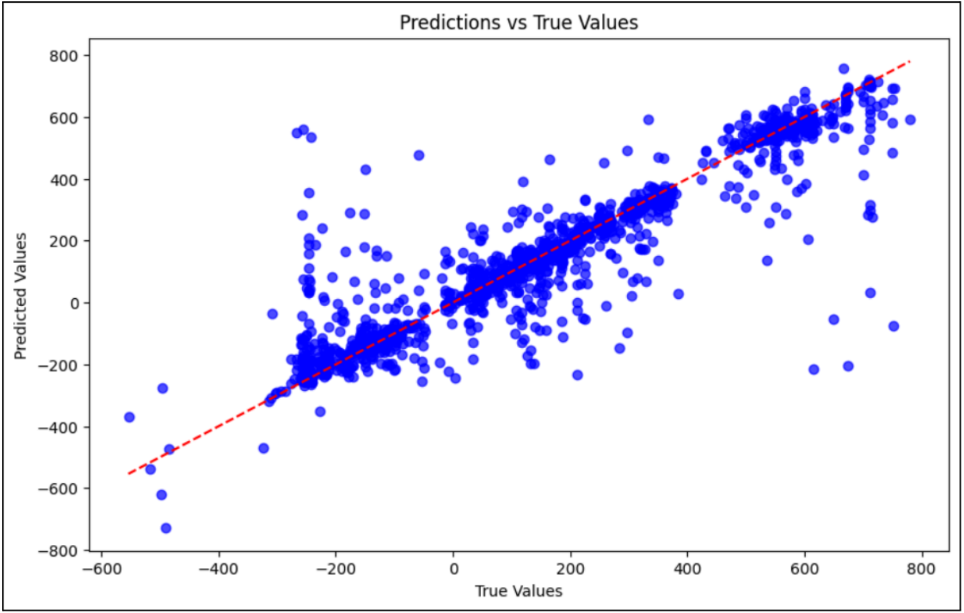
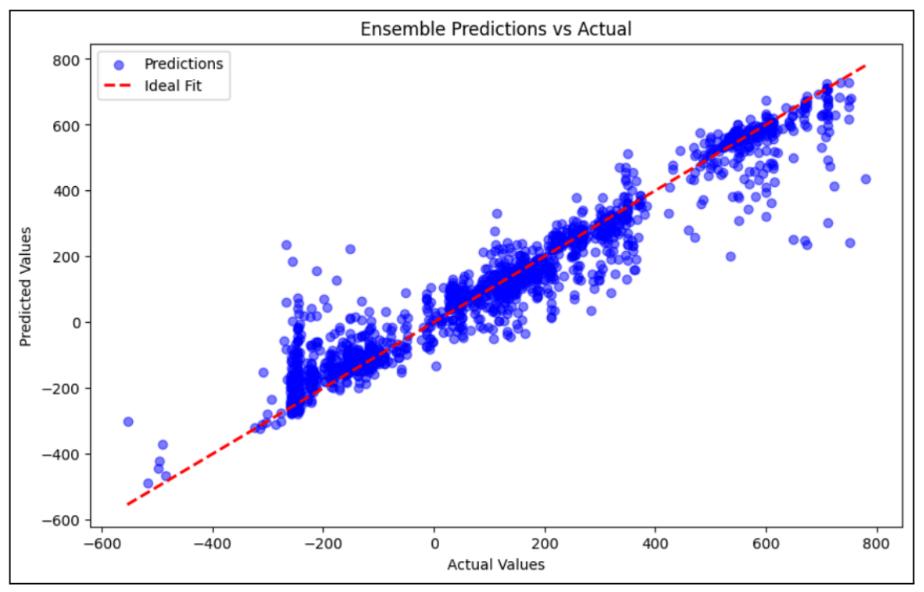
Scatter plots comparing predicted values to actual for each model (see
example Figures 6 and 7) revealed two distinct periods (200 BC and within
the range of 600-700 AD) where the predictions deviated from the actual
values. The scatter plots exhibit a high dispersion of points, particularly
in earlier historical points, which suggests unique challenges, such as
limited training data or ambiguous named entities in these periods. Further
refinement of the feature set or the inclusion of additional historical
context may be necessary to enhance predictions for these challenging
periods.
5.2. Selected Examples
Here we present a selected set of examples to demonstrate the usage of this
method. The table contains three of the best predictions (lowest error) and
three of the worst predictions (highest error), along with the most
influential features that led to the prediction (the positive values next to
the feature indicate that there is a positive association between the
existence of that feature and the prediction. The negative value indicates
that there is a negative association between the existence of that feature
and the prediction.
| Case |
Actual |
Predicted |
Abs Error |
Influential Features |
| Best #1 |
248.0 |
248.0 |
0.0 |
Alexandros (+0.5), Lykophron (0.4), Oaphres (-0.4), Ammonios (+0.3)
|
| Best #2 |
120.0 |
120.1 |
0.1 |
Herakleides (+0.4), Aurelia (-0.3), Arsinoe (-0.2)
|
| Best #3 |
15.0 |
15.1 |
0.1 |
Apollonios (+0.5), Gorgias (-0.3), Kallias (-0.3)
|
| Worst #1 |
-256.0 |
184.2 |
440.2 |
Demetrios (+0.6), Isidoros (-0.4), Horion (-0.4), Karanis (-0.3)
|
| Worst #2 |
-120.0 |
300.4 |
420.4 |
Philoxenos (+0.5), Tryphon (-0.4), Theon (-0.3)
|
| Worst #3 |
-80.0 |
310.2 |
390.2 |
Sarapis (+0.5), Dionysia (-0.3), Paniskos (-0.3)
|
Table 3.
Top 3 best and worst model predictions with influential
features.
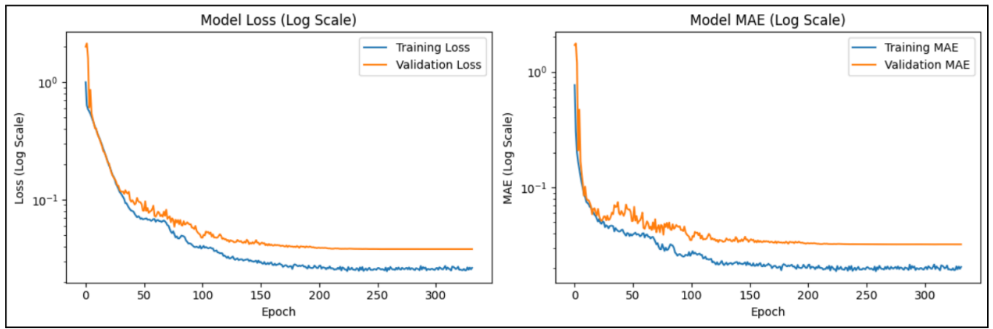
Figure 8 shows the neural network’s training and validation loss (left) and
mean absolute error (right) over epochs on a logarithmic scale. Model loss
stabilized within the 150-200 epoch range.
6. Discussion
This study showcases machine learning, especially ensemble models, for dating
historical texts, offering a scalable approach for computational humanities.
6.1. Performance of Different Models
The evaluation of multiple models revealed that linear models such as Lasso
and Ridge Regression performed poorly, with high mean absolute error values
exceeding 120 years. These models assume a linear relationship between
features and the target variable, which does not align with the inherent
complexities of historical text data.
In contrast, nonlinear models outperformed their linear counterparts, with
Random Forest achieving a test mean absolute error of 77.8, while XGBoost
further improved it to 71.4. The success of tree-based models indicates that
named entities (person and
place names) contain nontrivial temporal signals that can be effectively
captured through decision tree splits.
The deep learning approach using a neural network produced an even lower mean
absolute error of 48, confirming that neural networks can model intricate
data structures more effectively than traditional methods. Notably, the
10-fold cross-validation on the neural network yielded a similar mean
absolute error of 49.78, indicating that the model generalizes well across
different data subsets.
Finally, among the ensemble models evaluated, the 10-Fold Ensemble, which is
the weighted average of predictions from all neural network 10-fold models
that optimized overall regression performance, achieved the lowest mean
absolute error of 45.7, indicating its superior accuracy in minimizing
prediction errors (Table 1).
However, the RF + XG + LGBM + NN Ensemble demonstrated the highest R² value
of 0.9277 (see Table 1 and Table 2), signifying its ability to explain the
largest proportion of variance in the target variable (predicted year of
authorship) while still maintaining a competitive mean absolute error of 47.
Although the 10-Fold Ensemble slightly outperforms in terms of absolute
error, the RF + XG + LGBM + NN Ensemble provides a strong balance between
accuracy and predictive power, making it the best overall model for
historical text dating.
6.2. Cross-Validation and Generalization
The study highlights the importance of cross-validation in ensuring model
generalization. Lasso and Ridge regression models were evaluated using
5-fold cross-validation, while Random Forest underwent 5-fold
cross-validation with hyperparameter tuning via GridSearch. The use of
cross-validation helped mitigate overfitting and provided a more reliable
estimate of model performance. In contrast, the SVM and XGBoost models were
optimized using manual hyperparameter tuning. The ensemble models, which
combined multiple predictions, were evaluated using weighted averaging
techniques to leverage the strengths of individual models while minimizing
their weaknesses.
The results from cross-validation further validate the importance of
nonlinear models for this task. The neural network model achieved an average
mean absolute error of 49.78 across its 10 validation folds, demonstrating
its ability to generalize well to unseen data. The Random Forest model also
benefited from cross-validation through hyperparameter tuning with
GridSearch, leading to optimized results with improved generalization
performance.
6.3. Importance of Model Selection in Historical Text Dating
A key insight from this study is the necessity of choosing models that align
with the dataset’s structure. The poor performance of linear models
underscores the presence of nontrivial patterns in historical text data. The
significant improvement achieved by nonlinear models such as XGBoost and
Random Forest highlights the importance of ensemble learning in predicting
authorship dates. These models reduced the mean absolute error from over 120
years (Lasso and Ridge) to around 71 for XGBoost and 77 for Random
Forest.
The best performing models were the ensemble approaches, which combined
Random Forest, XGBoost, LightGBM, and Neural Network. The 10-Fold Ensemble
model (refer to section 6.1) achieved the lowest mean absolute error of 45.7
years, confirming that ensemble learning is beneficial for capturing the
complex relationships within historical text data.
6.4. Future work
As the current model relies primarily on named entities, which limits the
scope of information used for predictions, future work could incorporate
additional features such as text metadata, stylistic elements, or linguistic
analysis to better capture cultural and historical context. Incorporating
features related to language style, sentence structure, or thematic elements
could provide a richer dataset, leading to more accurate predictions.
While nonlinear models performed well, further improvements could be achieved
through more extensive hyperparameter tuning. Techniques such as grid
search, random search, or Bayesian optimization could refine model
parameters and enhance predictive accuracy. Additionally, exploring
different neural network architectures, activation functions, and training
strategies may reveal more optimal solutions. Future research could also
integrate probabilistic modeling techniques or deep learning approaches that
could provide a more nuanced way to manage date uncertainty, offering
confidence intervals rather than single-year predictions.
Moreover, the lack of cross-validation for support vector machine and XGBoost
suggests that further evaluation using systematic validation methods could
enhance reliability, particularly in cases where performance varied across
historical periods.
By refining and expanding this computational approach, this research advances
the field of digital humanities and historical text analysis. The ability to
date historical texts with greater accuracy and efficiency offers scholars
and archivists a powerful tool for preserving and understanding historical
narratives. With continued improvements in feature engineering, modeling
techniques, and dataset expansion, machine learning-based approaches have
the potential to revolutionize historical manuscript dating and related
fields.
7. Conclusion
This study developed a machine learning regression model to predict the
authorship dates of historical texts using named entities, specifically person
and place names, as temporal markers. Unlike traditional historical manuscript
dating methods, which rely on physical examination, paleographic analysis, or
expert interpretation, this approach introduces a scalable and non-destructive
alternative capable of efficiently processing large textual datasets. The key
contribution of this work is the demonstration that named entities can serve as
effective temporal indicators, providing a novel feature set for dating
historical texts. By structuring the dataset as a one-hot encoded matrix of
named entities and implementing regression techniques, this study introduces a
computational framework that refines the estimation of textual origins.
The results highlight that the model performs well in predicting exact years for
texts where definitive dates are available. Linear models such as Lasso and
Ridge Regression struggled to capture the complexities of the data, resulting in
poor performance. In contrast, nonlinear models, including Random Forest and
XGBoost, significantly outperformed linear methods by effectively modeling
intricate patterns. To further enhance predictive accuracy, deep learning
approaches using neural networks were explored, demonstrating competitive
performance and scalability for larger datasets. Among all models tested, the
ensemble approach proved to be the most effective, capturing the most variance
and achieving the highest predictive accuracy. With a mean absolute error of
45.75 years, the 10-fold ensemble (refer to section 6.1) model successfully
estimated authorship dates within a reasonable margin, demonstrating its
potential for historical text dating.
Challenges arose when dealing with texts containing anachronistic references or
names persisting across long historical spans, leading to occasional
misclassifications. Additionally, while this approach demonstrated reasonable
predictive accuracy, some degree of error persisted, particularly for texts with
limited historical context or insufficient named entity occurrences.
Despite these promising findings, several areas for improvement remain. The
assumption that named entities alone are reliable indicators of time is not
always valid, as historical figures and locations can appear in texts written
long after their referenced period. Furthermore, the accuracy of historical name
annotations in the dataset directly impacts model performance, introducing
potential noise. Handling texts with uncertain date ranges also presents an
ongoing challenge, requiring further methodological refinement to account for
temporal ambiguity.
The modeling approach used in this study, using text-derived features to date
historical texts, can be applied broadly across digital humanities datasets.
Many humanities corpora share structural similarities: They contain named
entities, locations, chronological indicators, and stylistic patterns that vary
across authors, regions, or time periods. Models like the one used here can help
uncover latent structure within these features, enabling researchers to detect
authorship signals, identify regional or administrative variations, trace
linguistic change, or predict missing metadata such as date, provenance, or
genre. Because the framework is feature-centric and interpretable, it is
well-suited for historical corpora where transparency and scholarly
justification are essential. Therefore, similar workflows could support research
in areas such as epigraphy, manuscript studies, or historical newspaper
analysis, allowing scholars to systematically explore patterns that are
difficult to see through manual inspection alone.
Works Cited
Assael et al. 2025 Assael, Y., Sommerschield, T.,
Cooley, A., Shillingford, B., Pavlopoulos, J., Suresh, P., Herms, B., Grayston,
J., et al. (2025)
“Contextualizing ancient texts with
generative neural networks”,
Nature,
645(8079), pp. 141–147. Available at:
https://doi.org/10.1038/s41586-025-09292-5.
Broux and Depauw 2015 Broux, Y., and Depauw, M.
(2015) “Developing onomastic gazetteers and prosopographies
for the ancient world through named entity recognition and graph
visualization: Some examples from trismegistos people”, in L. Aiello
and D. McFarland (eds.) Social Informatics. SocInfo 2014.
Lecture Notes in Computer Science (Vol. 8852). Springer,
Cham.
Castro et al. 2004 Castro, K., Vandenabeele, P.,
Rodríguez-Laso, M., Moens, L., De Schryver, S., and Van Hooydonk, G. (2004)
“Micro-raman analysis of coloured lithographs”,
Analytical and Bioanalytical Chemistry,
379(5-6), pp. 674–683.
Depauw 2018 Depauw, M. (2018) “Trismegistos. optimizing interoperability for texts from the
ancient world”, in A. De Santis and I. Rossi (eds.) Crossing Experiences in Digital Epigraphy. From Practice to
Discipline. De Gruyter, pp. 191–199.
Depauw and Van Beek 2009 Depauw, M., and Van
Beek, B. (2009) “People in Greek documentary papyri. First
results of a research project”, The Journal of
Juristic Papyrology, 39, pp. 31–47.
Dhali et al. 2020 Dhali, M.A., Jansen, C.N., de
Wit, J.W., and Schomaker, L. (2020)
“Feature-extraction
methods for historical manuscript dating based on writing style
development”,
Pattern Recognition
Letters, 131, pp. 413-420. Available at:
https://www.sciencedirect.com/science/article/pii/S0167865520300386.
Hamid et al. 2018 Hamid, A., Bibi, M., Siddiqi,
I., and Moetesum, M. (2018) “Historical manuscript dating
using textural measures”, in 2018 International
Conference on Frontiers of Information Technology (FIT), pp.
235-240.
He et al. 2014 He, S., Sammara, P., Burgers, J., and
Schomaker, L. (2014) “Towards style-based dating of
historical documents”, in 2014 14th
International Conference on Frontiers in Handwriting Recognition,
pp. 265-270.
Hellwig 2019 Hellwig, O. (2019) “Dating Sanskrit texts using linguistic features and neural
networks”, Indogermanische Forschungen,
121, pp. 1-27.
Jull et al. 1995 Jull, A.J.T., Donahue, D.J.,
Broshi, M., and Tov, E. (1995) “Radiocarbon dating of
scrolls and linen fragments from the Judean desert”, Radiocarbon, 37(1), pp. 11–19.
Koopmans et al. 2024 Koopmans, L., Dhali, M.A.,
and Schomaker, L. (2024)
“Performance analysis of
handwritten text augmentation on style-based dating of historical
documents”,
SN COMPUT. SCI., 5(397).
Available at:
https://doi.org/10.1007/s42979-024-02688-6.
Kumar et al. 2011 Kumar, A., Lease, M., and
Baldridge, J. (2011)
“Supervised language modeling for
temporal resolution of texts”, in
Proceedings of
the 20th ACM International Conference on Information and Knowledge
Management. New York, NY, USA: Association for Computing Machinery,
pp. 2069–2072. Available at:
https://doi.org/10.1145/2063576.2063892.
Moscato et al. 2022 Moscato, V., Craig, H.,
Haque,M.N., Huang, K., Sloan, J., and Corrales de Oliveira, J. (2022)
“Multiple regression techniques for modelling dates of first
performances of Shakespeare-era plays”,
Expert
Systems With Applications, 200, 116903. Available at:
https://doi.org/10.1016/j.eswa.2022.116903
Omayio et al. 2022 Omayio, E.O., Indu, S., and
Panda, J. (2022)
“Historical manuscript dating: Traditional
and current trends”,
Multimedia Tools and
Applications, 81, pp. 31573–31602. Available at:
https://doi.org/10.1007/s11042-022-12927-8
Pavlopoulos et al. 2024 Pavlopoulos, J.,
Konstantinidou, M., Marthot-Santaniello, I., Essler, H., and Paparigopoulou, A.
(2024)
“Dating Greek papyri with text regression”, in
Proceedings of the 61st Annual Meeting of the
Association for Computational Linguistics. Toronto, Canada:
Association for Computational Linguistics, pp. 1–12. Available at:
https://doi.org/10.18653/v1/2023.acl-long.556
Ren et al. 2023 Ren, H., Wang, H., Zhao, Y., and
Ren, Y. (2023)
“Time-aware language modeling for historical
text dating”, in H. Bouamor, J. Pino, and K. Bali (eds.)
Findings of the Association for Computational Linguistics:
EMNLP 2023. Singapore: Association for Computational Linguistics,
pp. 13646–13656. Available at:
https://aclanthology.org/2023.findings-emnlp.911/.
Ullah and Jamjoom 2022 Ullah, Z., and Jamjoom, M.
(2022)
“An intelligent approach for Arabic handwritten
letter recognition using convolutional neural network”,
PeerJ Computer Science, 8, e995. Available at:
https://doi.org/10.7717/peerj-cs.995.
Van Schaik 2013 Van
Schaik, S. (2013) “Dating early Tibetan manuscripts: A
paleographical method”, Scribes, Texts and
Rituals in Early Tibet and Dunhuang, pp. 119–135.
Wahlberg et al. 2016 Wahlberg, F., Wilkinson,
T., and Brun, A. (2016)
“Historical manuscript production
date estimation using deep convolutional neural networks”, in
2016 15th International Conference on Frontiers in Handwriting
Recognition (ICFHR), pp. 205-210. Available at:
https://doi.org/10.1109/ICFHR.2016.0048
Yu and Huangfu 2019 Yu, X., and Huangfu, W. (2019)
“A machine learning model for the dating of ancient
Chinese texts”, in
2019 International Conference
on Asian Language Processing (IALP), pp. 115-120. Available at:
https://doi.org/10.1109/IALP48816.2019.9037653


 https://orcid.org/0000-0002-8885-622X