Voces y Caras: Latinx Communities of North Florida [
Voces y Caras: Hispanic Communities of North Florida 2012] is a digital oral history project in which students at the University of North Florida
(UNF) design and conduct interviews in Spanish with local Latinx residents. Since
2012, over two hundred students and an equal number of community members have participated,
[1]
building a vast collection of stories focused on the realities of immigration, the
experiences of women in Latinx cultures, and the diversity found among those of Latin
American origin in the U.S. Through its online archive and the annual in-person exhibits
and public presentations that the project hosts,
Voces y Caras has showcased the perspectives of a population that is otherwise largely invisible.
Teaching Heritage Speakers of Spanish
As a Colombian American, I have lived most of my life surrounded by Latinx people
who spoke Spanish, initially as a child in Colombia and later as a young person living
in New York City. In 2010 I moved to Jacksonville to work at the University of North
Florida. What I missed more than anything was the Latinx community. At first, I didn't
see Latinos either on campus or in the city and did not hear Spanish outside of my
department. By word of mouth, little by little, I found people and places scattered
throughout Jacksonville. I was surprised because, although there were Latinos, there
really wasn’t a united community like in other cities in Florida and across the country.
In many ways, this is directly related to the city's geography and history. Unlike
Central and South Florida, where the density of those identifying as Hispanic/Latino
is greater, in Duval County individuals self-reporting in those categories represent
only 12.6% of the total population, according to estimates based on the 2023 American
Community Survey [
U.S. Census Bureau n.d.].
[2]
While this is a considerable figure, due to the city’s physical characteristics and
a complex history with minority groups, this population, until very recently, went
unnoticed. Jacksonville is so large that it occupies an entire county, Duval County,
which makes everything quite spread out. There are no neighborhoods or cultural centers
representative of Latino communities, but rather, businesses, restaurants, etc. are
scattered throughout a city that long ago abandoned its downtown and today blends
into a larger metropolitan area across multiple counties.
From that need to encounter a Spanish speaking community both at the university and
in the city, I came up with the idea for this oral history project. On the one hand,
I was intrigued by the possibility of uniting a variety of voices, and on the other,
by the desire to make them visible with the aid of the digital tools available to
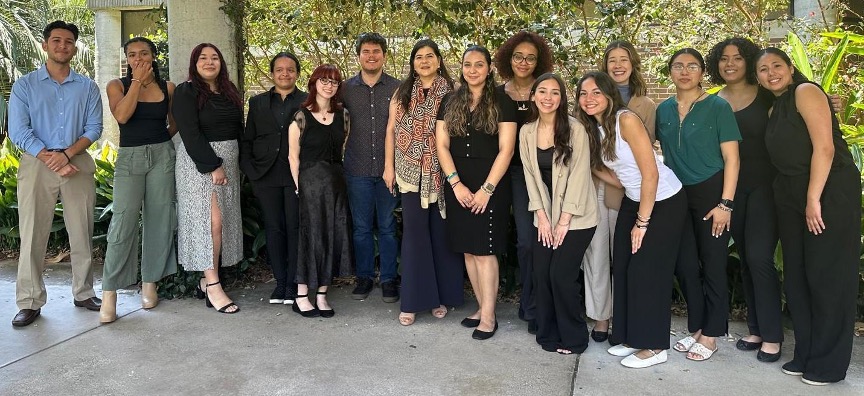
me. In 2012, with a group of 23 students from different Spanish-speaking countries,
I started what would become Voces y Caras: Latinx Communities of North Florida.
Since its inception, Voces y Caras has been a central component of the undergraduate course Communication and Communities
for Heritage Speakers of Spanish, which I teach every spring. Heritage speakers of
Spanish are those who have grown up in the United States speaking Spanish with their
families and communities, but who generally have had little formal training in the
language. In North Florida, these students come from a broad range of national backgrounds.
While the largest groups are those whose families come from Colombia, Venezuela, Puerto
Rico, Mexico, Cuba and the Dominican Republic, the course has involved students from
nearly every country in the Hispanic world. Their level of experience in the language
varies, with some having native or near-native fluency but many others functioning
at lower levels of proficiency. Most have grown up navigating between Latino spaces
and mainstream US culture.
These students often feel that their Spanish is imperfect and that, as Latinx, they
should have greater mastery of the language. They often also feel disconnected from
the traditions that define their cultural heritage and long to better understand their
experiences and those of their families and communities. Communication and Communities
for Heritage Speakers of Spanish focuses, therefore, on helping students to both appreciate
the linguistic varieties and cultural richness that students themselves offer and
gain the confidence they need to use their linguistic skills in professional settings.
[3]
Since UNF is a predominantly white institution,
[4]
Latinx students frequently feel ostracized, and, as they are commonly the first members
of their families to attend college, the campus is often a foreign space to their
parents and other relatives. The participation of these students in projects that
have been recognized by the university and community is a source of pride for themselves
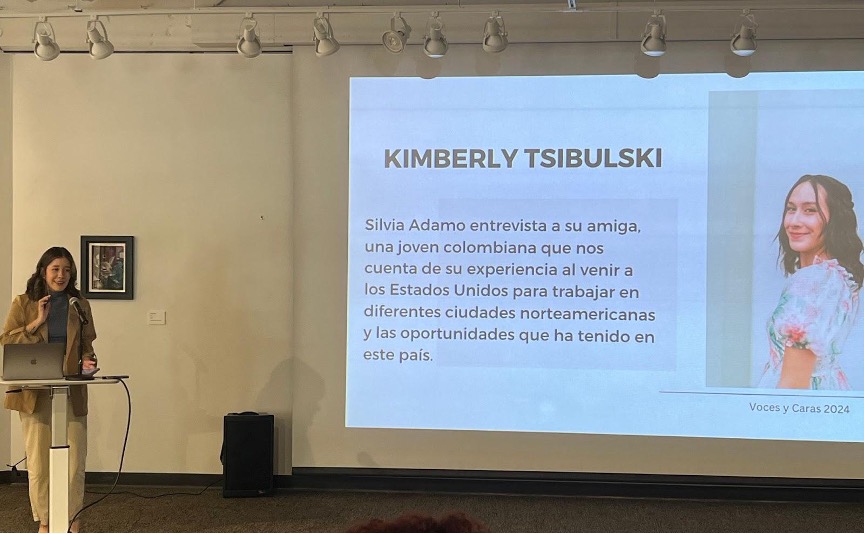
and for their loved ones. Our in-person events are essential for connecting with the
community. The first one is the final class presentation, in which students reflect
on their interviews and their experiences with their interviewees. Beyond being a
class presentation, it is a heartfelt ceremony and celebration to which the interviewees,
their families, and the general public are invited. It takes place in important university
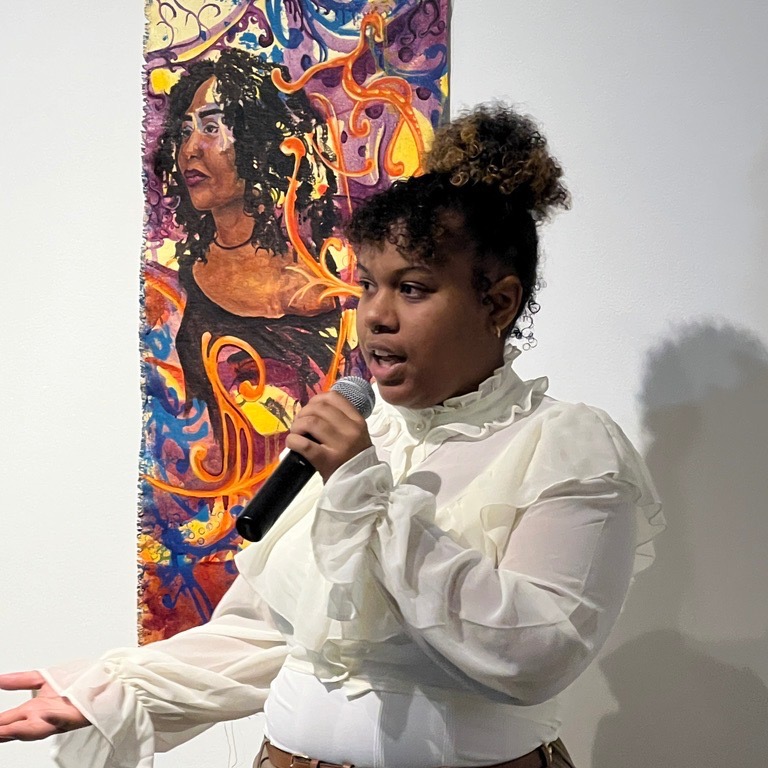
locations such as the UNF Art Gallery. The second event is an exhibition during Hispanic
Heritage Month in which the interviews are presented alongside artwork by Latinx students
and alumni. During Opening Night, interviewees, artists, and the community at large
are welcomed. During these events, some of the students have had the opportunity to
speak to the press and have been interviewed for the university newspaper and other
media. Additionally, many of my students have continued working on the project beyond
class, working on the technology side, helping with website construction, and/or attending
national and international conferences to present about their own interviews and the
project in general. At UNF, we have more Spanish-speaking students than ever, and
as the Hispanic/Latinx community continues to grow and is increasingly present in
all aspects of society in and around our city, celebrating our heritage, contributions,
and language is essential.
My class relies on a
sentipensante (feeling/thinking) pedagogical model that allows the individual to learn by reflecting
on the aspects of society that marginalize them while using creativity to incite critical
thinking and hands-on knowledge. Laura Rendón explains that a
sentipensante pedagogy:
is a culturally-validating, deep learning experience that addresses the harmonic balance
and interconnection between intellectual, social, emotional, and inner-life skill
development. This is a pedagogy that connects learning experiences to equity and justice
issues in our society and that fosters deep learning through the use of prácticas
de conocimiento/illuminative knowledge tools that can potentially engage body, mind,
and sensory processes. Examples of these prácticas include autoethnography, storytelling,
moments of silence, music, poetry, arts-based projects, testimonios, socially-driven
art and photography, ritual, cultural immersions, and bearing witness, among others
[
Rendón 2023, 2].
This course and oral history project, and all the preparation it entails, allows for
an approach to teaching that involves horizontal communication within the classroom.
As a professor, I bring certain parameters within which the students should work,
but their contributions, their knowledge of the migrant experience and that of their
families are crucial to creating community. As this is a particular group that, although
diverse, has shared experiences, it is important to first recognize our historical
marginality, to create ways of thinking and critically discussing our cultures and
modes of knowledge production. Through class discussions we learn to understand how
we contribute to society and our value as bicultural and bilingual people. We discuss
the challenges that many Latinx youth face in not necessarily belonging to their parents’
culture and at the same time feeling like they don't belong in the “American” culture.
Our approach allows us to recognize ways in which our narratives/stories are essential
to the creation of a rich and diverse culture in the United States.
I divide our semester into three parts. The first is an exploration of our own identity
and the culture we have inherited. Our class discussions and roundtables include sharing
our family immigration history. This is particularly important because students realize
that there are many different stories to learn about right in our classroom. Additionally,
Spanish-language podcasts like Radio Ambulante and Crónicas al Borde are very helpful, as students learn how stories are told. I choose podcasts about
diverse migrant experiences, some serious and others humorous, which reveal that not
all stories have to be sad, and that no migrant experience is more relevant than another.
We read several articles by experts on how interviews are conducted. However, I believe
the best teaching tool I have is the Voces y Caras website, where students listen to interviews from previous years and see concrete
examples of what is expected in class, as well as how to improve the way we ask questions
and listen to our interviewees. We have activities where these interviews are critically
analyzed.
These reflections also help students identify the people they would like to interview
and write questions for those conversations. Over the course of the semester, they
record and edit the interviews, and at the end of the term, they participate in the
aforementioned public presentation, at which they discuss their interviews and their
experiences working on the project. Over the summer, we publish the recordings of
the interviews with captions in Spanish, along with the summaries and photographs
of the interviewees, on a WordPress website supported by the UNF Center for Instruction
and Research Technology and the UNF Digital Humanities Institute. In the fall of each
year,
Voces y Caras hosts a multimedia exhibit to commemorate Hispanic Heritage Month at the UNF Gallery
of Art, in partnership with the Department of Art, Art History and Design, with an
opening reception attended by the students, their families, the interviewees and the
public in general.
[5]
Communication and cooperation through group activities allow students to feel confident
in selecting members of our community to interview (family members, friends, professionals
from different fields, etc.). By sharing their own experiences of the interview process
with their peers, they reflect on the direction they want to take and use their language
skills in a more structured and deliberate way. The experience of successfully conducting
interviews, hearing their own voices on recordings, and preparing to speak to a wide
audience gives them the opportunity to discover the agency they can exercise through
their knowledge of Spanish. By the end of the semester, students feel more confident
in their language skills, and the transformation is even evident in their posture
and the way they project their voices. Some of them even feel they can communicate
with their own families in Spanish without being mocked. In this way, language is
not only a tool for personal communication or a marker of identity, but also a source
of power that students can wield in the world around them.
[6]
Initially, the project was conceived with the two goals discussed so far: to serve
as a vehicle for Heritage language learners to employ their language skills in an
applied setting and to visibilize the Hispanic/Latinx community in our area. However,
the benefits for students and for myself have gone beyond those objectives. Since
the beginning, students have expressed that the project has impacted them in ways
I had not anticipated. For some, these benefits have been practical, and for many,
they have also been personal.
In terms of practical outcomes, Voces y Caras has provided a way for several to complete internships and honors capstone requirements.
Participants in these roles have assumed a higher level of responsibility with the
project, as well as a greater sense of ownership. They have created content, updated
the WordPress website, and maintained social media accounts. They have also helped
to curate the annual exhibition of Voces y Caras that takes place during Hispanic Heritage Month.
This work, in turn, has allowed several of them to gain experience with professional
and scholarly communication. Nine students have presented posters on their work with
Voces y Caras at events organized by the UNF Digital Humanities Institute, the UNF Office of Undergraduate
Research, the Florida Undergraduate Research Association, and the Florida Digital
Humanities Consortium.
[7]
Three of those students also participated in the VI Encuentro de Humanistas Digitales
in San Luis Potosí in November 2023 and are co-authors of a recent article [
López Baquero et. al 2026]
More importantly, Voces y Caras has provided all participants the opportunity to better understand themselves and
their communities. Through knowledge practices, students have learned to proudly celebrate
their stories, their culture, and their contributions as first and second-generation
immigrants. They have also gained appreciation for the efforts of their parents, whom
they consider to be people who contribute to society and make it better. Many times,
they discover their generational trauma and, although they are full of love for their
families and roots, they also address the challenges they have faced growing up in
these families and criticize and address the cultural customs that affect them.
The opportunity to be part of a different kind of knowledge production is especially
valuable in a time when higher education is in crisis. The capabilities of artificial
intelligence have rapidly increased at the same time that a general societal skepticism
of higher education seems to worsen. Both trends threaten to devalue scholarly production,
a decline that experiences like those described in this study can help to counter.
Acting as equal participants in the construction of community knowledge gives students
a chance to see that the work of scholars is often built not merely on the writing
of books and articles but also on the cultivation of human relationships, the establishment
of trust, and solidarity with publics outside the academic sphere.
For me, this work has made me think critically about teaching and the objectives of
education. More and more, what I want to bring to the classroom is an education where
the affective bond has a place, where a personal and collective transformation is
achieved, where what is done in class are life and ethics lessons, where seeds for
change are sown.
Involvement in Voces y Caras has had consequences not only for the students and for me, but also their families
and others from the community who have given us their time and have shared their stories
and dreams with us. It is also a project of many tears of sadness for what has been
left behind and joy in discovering that our community has a voice. Our interviewees
have responded with enormous gratitude for being listened to and valued as people
who build a better city and a better country. This is evident particularly when we
ask them questions such as “How do you think Latinos contribute to U.S. society?”
The interviewees’ responses often highlight the hard work that immigrants do and the
pride they feel in the sacrifices they have made because their children are obtaining
an education. They frequently thank their interviewers for creating spaces in which
their stories can be appreciated.
Public Humanities and Latinx Oral History
Voces y Caras does not exist in isolation, but rather forms part of a growing body of projects
focused on capturing the experiences of Latinx populations in the U.S. Discussed elsewhere
in this special issue, Humanizing Deportation is a project based at the University
of California, Davis, that serves as
“a community based digital storytelling project” that examines
“the human consequences of contemporary regimes of migration and border control in
the United States and Mexico” [
Humanizing Deportation n.d.]. The Bracero History Archive, a project of the Roy Rosenzweig Center for History
and New Media and several partner institutions, gathers interviews with individuals
whose families were impacted by the Bracero migrant worker program that ran from 1942
to 1964 [
Bracero History Archive n.d.]. Elena Foulis led Oral Narratives of Latin@s in Ohio, hosted by the Center for Folklore
Studies at the Ohio State University [
Center for Folklife Studies n.d.], and has published widely on Latinx oral history, including in the forthcoming book
Embodied Encounters: Oral History Archives of Latine/x Experiences. The Yale University Library maintains a research guide that lists other Latinx oral
history projects [
Yale University Library n.d.], and the
Voces Oral History Center at the University of Texas-Austin has promoted this type of work
for over twenty-five years, through both its archive and the publication of the
US Latina and Latino Oral History Journal [
Voces Oral History Center n.d.].
Voces y Caras likewise forms part of a growing movement toward conducting scholarship that is not
only public-facing but involves the public as creators and collaborators. Scholars
have argued that taking academic work to communities and engaging with them in meaningful
partnerships creates networks of support and resistance in the face of challenges
such as misinformation and the neo-fascist rhetoric about minority groups that has
become increasingly mainstream and threatens the wellbeing and survival of those communities.
In the context of the wholesale devaluation of humanities disciplines, some scholars
also see in such engagement and activism a way to make the humanities relevant again.
[8]
In this sense, Voces y Caras also intersects with conversations around the role of community building in both
research and teaching. Engaging students in work that is meaningful and that considers
community stories as a fundamental part of the educational experience with historical
ramifications has the capacity to promote profound changes in the students themselves
and in society. This type of work avoids what David Wiley has called “the disposable
assignment,” referring to all those tasks that students must do that have no meaning
for them or for us as teachers (“What is”). In the case of heritage language students,
working with their community and family members can be a transformative experience
that promotes a dialogue that goes beyond the classroom.
Projects like
Voces y Caras that aim to make a difference beyond the academy build upon the ideas of Brazilian
educator Paulo Freire (1921–1997) who promulgated an education for the change of society
[
Freire 1971]. In particular, it is important, as Freire says, to acquire a "critical consciousness"
in the face of our marginalization as migrants and from there, work in a community
so that learning becomes a "practice of freedom" [
Freire 1971, 35]. I apply this freedom in my classroom as a process of letting go of the fear
of identifying as Latinos and speaking Spanish. Students understand that our identity
contributes to making the society we live in better. They also realize that although
they are neither from here nor from there, they are bicultural, bilingual individuals,
and that by coming together, they can combine the best of these places where their
roots and cultures come from, and the best of the country they live in. Academic work
that engages with communities offers the opportunity to democratize knowledge, and
this is perhaps truer today than ever, with technologies at our fingertips that offer
immediate ways to interact with and serve communities. However, as Sheila Brennan
has cautioned, these projects must be easily accessible:
First, any public digital humanities project should be designed such that people of
all abilities can use and access it on the Web. Second, projects should be built in
ways that reach primary audiences on the platforms they regularly use. This may mean
designing a light mobile framework to reach people who only access the Web from handheld
devices. If users communicate on one specific social media space, the project should
be there. If users speak multiple languages, the platform choice must allow for that
content to be accessible in those languages. Third, the language, symbols, and navigational
paths embedded in the digital project must be understandable by its users and participants.
A public digital humanities project should never make the audience feel dumb or unwelcome
in that space. Fourth, names are important. Projects should be named after something
meaningful to the targeted audiences
[
Brennan 2016, 387].
Voces y Caras: Latinx Communities of North Florida is a project created with the community in mind. The title of the project was chosen
by the first cohort of students to reflect both the languages that most of our students
speak or understand. The name also refers to the visibility/invisibility of our community
which has a voice that is not always heard. Caras (faces) represent the diversity of our people who cannot be cataloged or pigeonholed
because they come from very different places with diverse experiences.
Adding to Brennan’s list of caveats, I propose that digital public humanities projects
should also, when possible, involve non-digital components. The presence of Voces y Caras on digital platforms makes it available to many publics, but the full potential of
the project for building community is realized through the physical/in-person events
and exhibits. Those activities provide opportunities for students and community members
to meet, discover a sense of solidarity, and see themselves and their stories represented.
Having their work exhibited in important places on campus has also allowed Latinx
students to feel recognized within the university.
In this way, Voces y Caras was designed to be both a digital project and a vehicle for building in-person connections,
and the two modalities complement and build off each other. Celebrating the work of
students and community members in the building of the digital archive motivates the
in-person events. Those experiences, in turn, help create the relationships on campus
and beyond that allow the project to continue to grow and thrive.
Stories of Trauma and Hope
The circumstances under which people migrate are as diverse as individuals themselves.
However, discourses around immigration in the U.S. today tend to reduce immigrants
to a single category that is often associated with the pejorative designation “illegal.”
Such rhetoric deliberately positions immigrants as invaders and takers of resources
and seeks to invisibilize, dehumanize, and deliberately erase migrants. This attempt
to classify human beings helps elites and political powers launch smear campaigns
that often serve to hide or divert attention from much larger problems. This old tactic
has served many repressive governments around the world as a fascist tool to move
the masses through hatred toward others. For this reason, projects that focus on human
dignity are essential since they put a face to numbers and give voice to those who
have been silenced or ignored.
In different ways, all the stories that Voces y Caras has collected over the years offer something that connects us to the human experience
and breaks down stereotypes about immigrants in Florida. Part of the impact of the
collection resides in the sheer variety of lives that it catalogues. Some of the stories
intersect with current discourse around immigration, including accounts of crossing
the United States-Mexico border, but do so in ways that directly counter the stereotypes
about migrants that appear in the news and popular media. Others present visions of
migration and adaptation that the popular imagination around immigration does not
contemplate. In all cases, the interviews express in powerful ways the individuality
of each interviewee and the uniqueness of their lived experience. I believe this variety
and its power is best demonstrated by highlighting a few examples.
Ana Salvador
When I first proposed the project to my students in 2012, Spanish major Patricia Alvarenga,
a Salvadoran American, expressed that she wanted to interview her husband’s mother,
Ana Salvador. Patricia loved her mother-in-law very much but felt that she did not
fully know her. Patricia believed Ana kept certain parts of her past to herself, perhaps
because of the immense pain they caused her. Patricia perceived Ana’s trauma, but
her mother-in-law was not able to fully express her feelings, not even to her family
members. Like many immigrants, Ana had set her personal story aside to focus on earning
a living and taking care of her family. As Patricia planned this interview, little
did we know that she was about to gather the testimony of a survivor.
Ana had come from El Salvador at a young age during the Salvadoran Civil War of the
1980s. She explained that the military and the leftist guerrillas were at war with
each other, but those who suffered were mainly the poor. In her account, both armies
were equally bad. She recalled how the military kidnapped and tortured her neighbor,
a young widower, in charge of his three children. When they took him away, his children
were left alone in the house and the youngest girl was only six months old. Ana herself
had to witness a massacre, and in her interview, she remembers the armed groups burning
buses and killing people indiscriminately. One day, while waiting for the bus, she
saw people run away in terror, tripping over the corpses that were strewn across the
streets. Like many others, during that period in Central American history, Ana had
to pack her entire life into a suitcase to come to the United States and start over
(Salvador 2012).
That story surprised me and still haunts me. As a specialist in Latin American Testimonio, I have done extensive research on testimonial narratives of Latin American women.
I studied Central American wars in-depth and focused particularly on Rigoberta Menchú’s
account of the struggle in Guatemala. However, I did not expect that in the first
installment of Voces y Caras, we were going to receive a valuable and compelling testimony from a woman who broke
her silence and revealed her trauma. For Ana, it was a great relief to be able to
tell her story to Patricia and get closer to her through the bond of family love.
However, for Patricia, it was the realization that this story, unbeknownst to her,
was also part of her history as a descendant of Salvadorans.
Edgard Javier Ramos
Voces y Caras was a new foray into new territory for me. I was doing digital humanities with little
background and was learning on the fly as I taught my students. We gradually learned
to interview, to ask the right questions, to find the best places to make the recordings,
and to choose the people we wanted to interview. As part of my learning, I interviewed
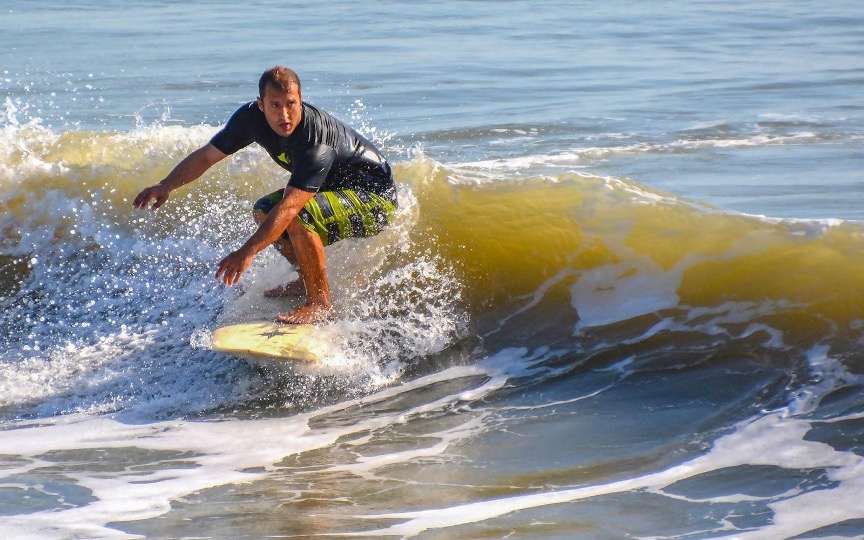
Puerto Rican student Edgard Javier Ramos in 2013. From previous conversations, I knew
that he had a heart transplant in his teens, and that every day, he got up before
dawn to go surfing on the beaches of Jacksonville. I wanted to interview him to find
out more.
Edgard’s goal was to live intensely and enjoy the second chance he was given. He told
me that he knew he was different at an early age because he could not do the same
activities as other children. He was diagnosed with cardiomyopathy and had his first
surgery when he was in first grade. For the next six years, he had surgery annually
to replace his pacemaker. In eighth grade, he was told that he needed a heart transplant.
In his interview, he remembered the wait time, his sadness, and his parents’ worry.
At age 14, Edgard was taken to a children’s hospital in St. Petersburg, Florida, to
wait for a heart. He spent six months in a small room not knowing if he was going
to live or die.
Edgard told me that surfing was his saving grace:
“I love surfing because the sea does not care if you have a heart transplant. The
sea is the sea, and it treats you in the same way, and that is what attracts me to
it.” I found wisdom in this interview. I admire Edgard’s courage and his will to live,
his connection to nature, and how he found emotional and physical healing in the sea:
“The sea, after all, accepts me, unlike many people whom I have met. … I do not know
if it’s strange to think like this but, for me, the sea is alive. The sea represents
me in so many ways; it is the only thing that has been constant in my life” [
Ramos 2013].
Karina Anticona
Over the years,
Voces y Caras has collected several stories of people who had to cross the Mexico-U.S. border.
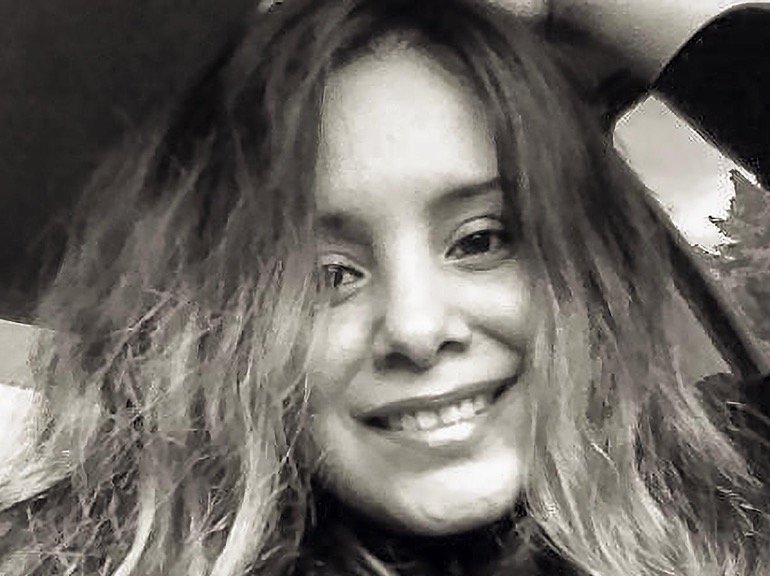
One of the first was the interview with Karina Anticona in 2014. My student Leslie
Echt had mentioned that her friend had an incredible story and I, as a researcher
specializing in gender-based violence, did not imagine that this story would also
connect with my academic work in such a direct way. The violence that women in Latin
America are exposed to and the terrible decisions they must make to stay safe and
protect their children is a story that still needs to be told. Karina came to the
United States leaving her four-year-old daughter in the care of her mother in Perú.
She crossed the border and worked to support her family, but after four years, fearing
for her child’s well-being, she decided to return to her country to get her. Karina
had to bring her eight-year-old daughter in the only way she was able, by crossing
through all the borders of all the South and Central American countries between Perú
and the United States:
“We crossed all the borders in the same way. We took cars, taxis, or buses to each
of the borders, and then we kept walking” [
Anticona 2014].
Karina's story is not unique, but rather her journey is an example of the humanitarian
crisis of thousands of migrants who travel these borders. They pass through geographies
as dangerous as the Darién Gap or the deserts of Chihuahua and Sonora, at the mercy
of armed criminal groups in Central America and México, where many migrants are kidnapped,
forcibly disappeared, or end up dead. There are many stories of women raped in front
of their children, and all this without taking into account the emotional and physical
stress of encountering wild animals, having to see babies and other human beings dead
on the road, and often finding themselves without having enough water or food. One
of the most moving parts of Karina’s story was when she crossed the final border between
México and the United States:
“We left in the afternoon, we were a group of ten people, there were two other children,
we walked a lot and at night we rested in the desert, we crossed rivers in the dark,
there were farms, it was a horrible road... There were animals, but we saw mainly
pythons and snakes” [
Anticona 2014]. When her daughter was about to collapse, she promised her a Happy Meal... if they
walked a little further, right where the lights were, the Happy Meal was waiting for
them... After arriving, dirty and tired, they headed to McDonald's with the little
money they had [
Anticona 2014].
Camilo Domínguez
Historically, Florida has been home to many Cuban Americans who have left the island,
often in desperate conditions. Crossing the sea frontier during the years of the Wet-Foot/Dry-Foot
policy was very difficult.
[9]
Many migrants threw themselves to the sea in homemade rafts putting their lives at
risk to get to Florida. Many were stopped by the authorities in the middle of the
ocean only to be sent back to Cuba or be detained in Guantanamo. In 2019 my student
Gabriella Domínguez Ramos interviewed her Cuban father.
Camilo Domínguez left Cuba three times in rafts he made with car tires and rope. In
his first two tries, he was arrested at sea and spent time in prison before being
returned to Cuba:
“The saddest thing was that after having already sailed about 25 or 30 miles in a
single night, and after having put a tremendous effort into it, at around noon the
next day, the coast guard came and forced me to get on their boat.” The third time, he arrived in Florida. In his conversation with his daughter, he
told her that his life in Cuba became unbearable because he felt that he was worth
less with each day that passed. In the interviews we have conducted Cuban migrants
often express nostalgia for their island, but also relief at having been able to leave
to find new opportunities. For them, life in Cuba was marked by scarcity, the sense
of stagnation and hopelessness, and the feeling that they could not think differently
or express disagreement for fear of the repressive government and the social sanctions
[
Domínguez 2019].
Nilsa Bonilla
In recent years, hundreds of Puerto Ricans have come to reside in Jacksonville and
its surrounding areas. Many of them are looking for new opportunities but with the
sadness of having had to leave their island, a U.S. colony that feels abandoned to
its destiny. After Hurricane María, thousands were forced to migrate due to shortages
in food and services, the deterioration of public infrastructure and health, the crisis
in education at all levels, and government corruption, among other problems. Getting
to Jacksonville has not been easy, since despite being U.S. citizens, Puerto Ricans
are discriminated against like other Latinos, a situation that increases their feeling
of being second-class citizens.
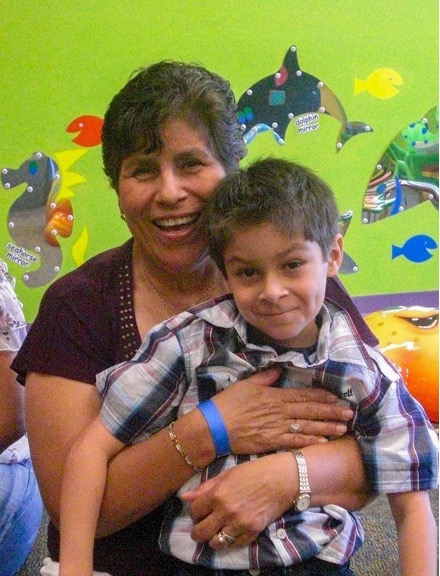
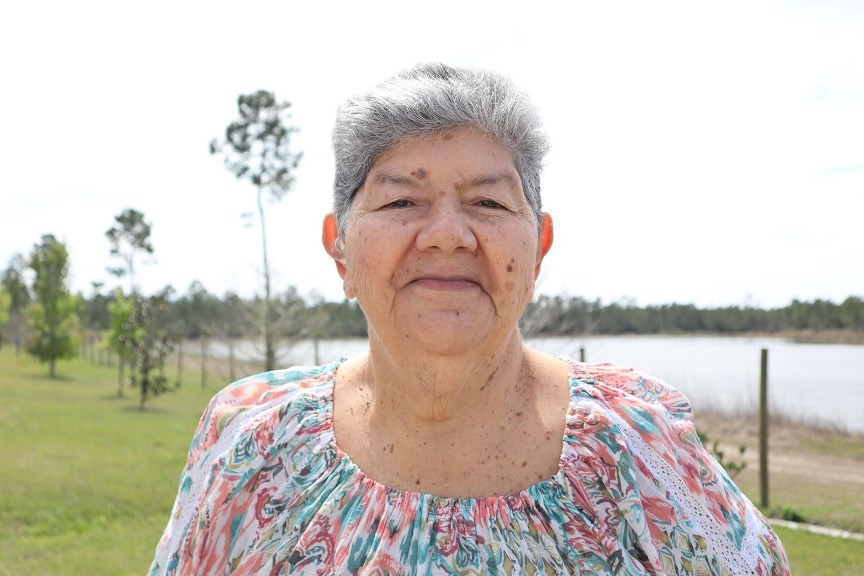
In 2023, Karina Ocasio Irizarri interviewed her grandmother, Nilsa Bonilla, who never
expected to leave her home, much less in her old age. Her story is nostalgic, reminiscing
about the sunrises in Puerto Rico, her routines, and the loss of her home after María.
Nilsa moved to Jacksonville due to illness. Her daughter brought her to live in a
comfortable house, but for her, leaving Puerto Rico has been traumatic. Like many
Puerto Rican immigrants, she hopes to return when things improve on the island. However,
to this day, this desire seems like a dream as the island’s problems seem unrelenting,
and vulnerable communities continue to struggle (Bonilla 2023).
Dr. Andrea Gaytán Cuesta
Also in 2023, my student Valentina Cordovez approached me because she wanted to interview
a Latinx professor at the university. I recommended that she interview my colleague
Dr. Andrea Gaytán Cuesta, who had just started as an assistant professor. Dr. Gaytán
Cuesta is originally from México and specializes in contemporary Latin American literature
and cinema. In her interview, she spoke about the importance of education in her life
and how the opportunities related to her studies led her to leave Mexico. Dr. Gaytán
Cuesta studied international relations and graduated with a master's degree from the
University of Bologna, Italy. She later earned her doctorate in Spanish from Rutgers
University.
Among her experiences, she related how difficult it was to get used to the food in
the United States, something that is quite common for immigrants who miss their flavors
and traditions. She also mentioned that she had experienced discrimination, with one
of the most horrific moments occurring when she was reading a book in Spanish in a
public place and a man approached her to ask where she was from. He demanded that
she show him her legal papers and yelled at her to go back to Mexico. The fear and
discomfort that such xenophobic attacks caused her is the reality that many immigrants
must face in the environment of intolerance and ignorance they often encounter in
the United States. Although Dr. Gaytán Cuesta misses Mexico and its celebrations and
culture, she would not return to live there in the near future since she has a successful
career in the U.S. [
Gaytán Cuesta 2023]. In her reflection, Valentina concluded that Dr. Gaytán Cuesta is a role model for
other Latinx women who want to succeed professionally [
Cordovez 2023].
These stories represent the ordeals of many who come to this country searching for
the a better life. They break stereotypes created by the media and people’s perception
that those who cross the border are exclusively men who steal jobs from American citizens.
In reality, many are also women who sometimes come fleeing violence, and other times,
looking for a better life for their children. Some are young people who have no choice,
as they must migrate to save their lives and achieve a future free of violence. With
sadness for leaving their countries behind, but hoping to take advantage of unique
opportunities, they come to the United States to work hard and raise their families.
Many have been following their loved ones, some come to fulfill their educational
and work goals, and others for health reasons or because they have lost their means
of survival.
Hispanics/Latinxs in the United States are a unique group because they form a community
in their new country made up of diverse people who come from many different Spanish-speaking
places. They find common social and linguistic customs, and they share their love
for music and food. For various reasons, Jacksonville and surrounding areas offer
them opportunities that cities with higher densities do not. Immigrants in this city
work in different sectors including agriculture, food, medicine, education, and other
service fields, and some are small business owners. Since there is no predominantly
Latinx neighborhood in the area, like in other cities in Florida and across the country,
they unite through work, social events, or religious groups.
Conclusions: Digital oral history and community building as a pedagogical approach
As an educational practice, digital oral history is an effective method for communities
that have been historically marginalized. The interview as a learning tool lends itself
as a way of recognizing, on the one hand, one’s own marginal situation, and on the
other, the power of group learning. These two conditions are essential for critical
education. This requires creating a community within the classroom and working together
and learning from each other. This teaching method generates a cooperation that transcends
the classroom experiences, as the friendship that arises from working together is
one of the most important aspects of the project.
Voces y Caras is a model that can be replicated and adapted for teaching Heritage Speakers at other
institutions located in places where minority groups feel isolated. Although the formal
aspects of the language are important, approaches that focus on linguistic remediation
can make Heritage speaker students feel inadequate, highlighting the differences between
the formal registers of the language and the ways in which students and their families
actually speak. By celebrating the mother tongue and its linguistic varieties — including
the ways Spanish is spoken by Latinx in the U.S. — and by emphasizing the value of
personal experience, students feel empowered and even begin to develop other language
skills and registers. Learning the use of different technologies aids in the professionalization
of these students, but beyond formal knowledge, the value of working in a community
must be emphasized. It is a skill that increases their self-esteem, making profound
changes in the students that allow them to not feel ashamed or inferior because they
are different or due to the variety of language they speak. Challenging these notions
is a decolonizing practice in education that has a long-lasting impact. Digital projects
that keep record of our challenges and achievements are also emancipatory for communities
that hear negative rhetoric about immigration not only through social media but in
everyday conversation.
As Latinos in the United States, we face many challenges, but through projects that
promote togetherness and affection, we can certainly find solutions. Voces y Caras has had an evolution that has required a lot of reflection and partnerships. It aims
to sentipensar humanity, an approach that is not always common in digital communities. Now in its
fourteenth year, the project has thrived through a lot of intuition and love and has
been sustainable thanks to the participation of a new cohort of students every spring,
as well as the community members who give so generously of themselves. Voces y Caras serves as a counter space for Latinx students at UNF who unlearn by learning about
empathy, dignity, and the power of community.


 https://orcid.org/0000-0001-8375-2061